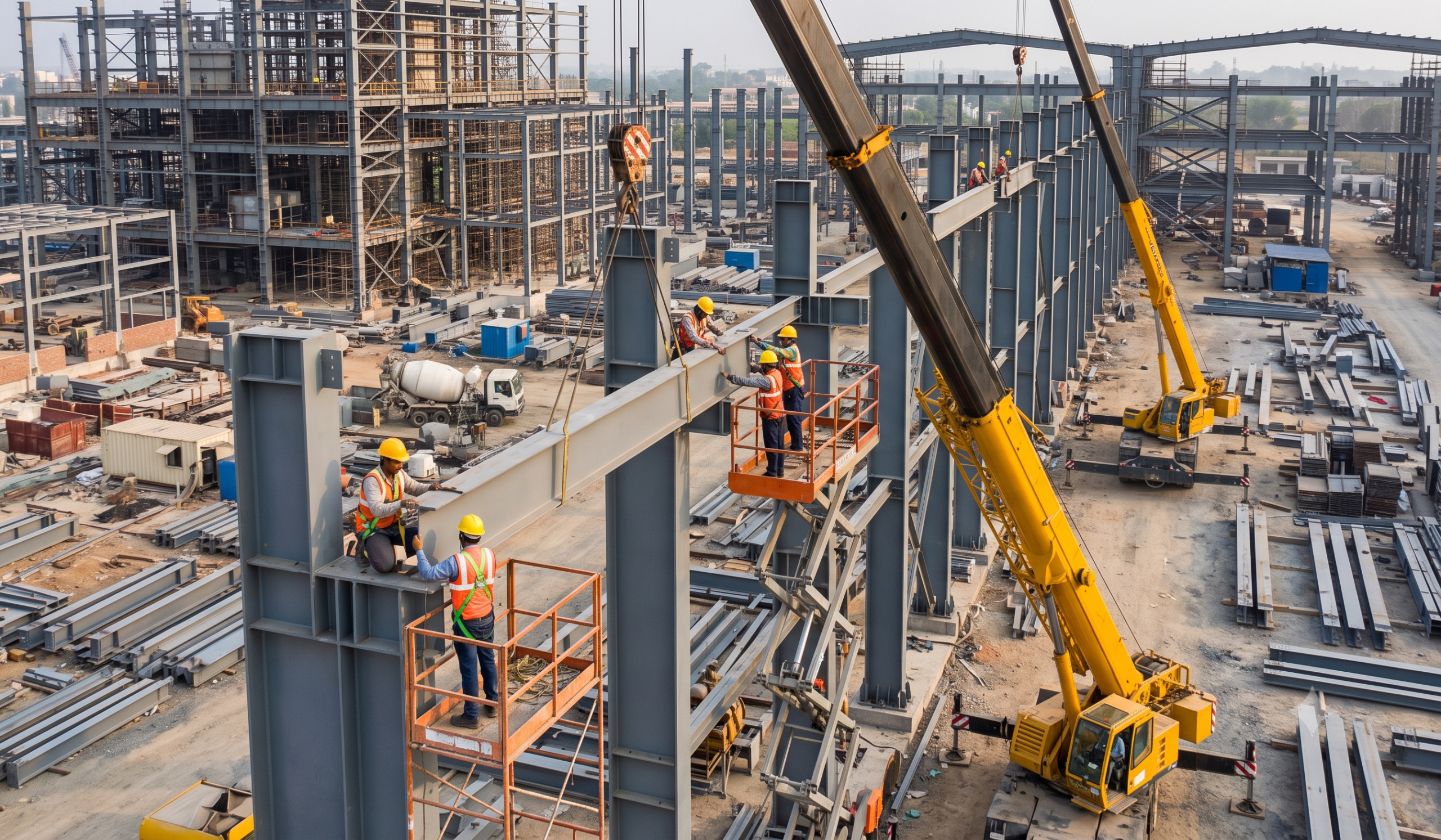
Structural steel erection is a critical phase in modern construction, involving the lifting, positioning, and assembling of fabricated steel components to build a stable framework. Whether constructing heavy industrial plants, commercial buildings, or infrastructure, erecting steel safely requires meticulous planning, skilled manpower, and precision engineering. This guide explains what structural steel erection is, the core procedures involved, and the necessary safety requirements for a successful execution.
What Is Structural Steel Erection?
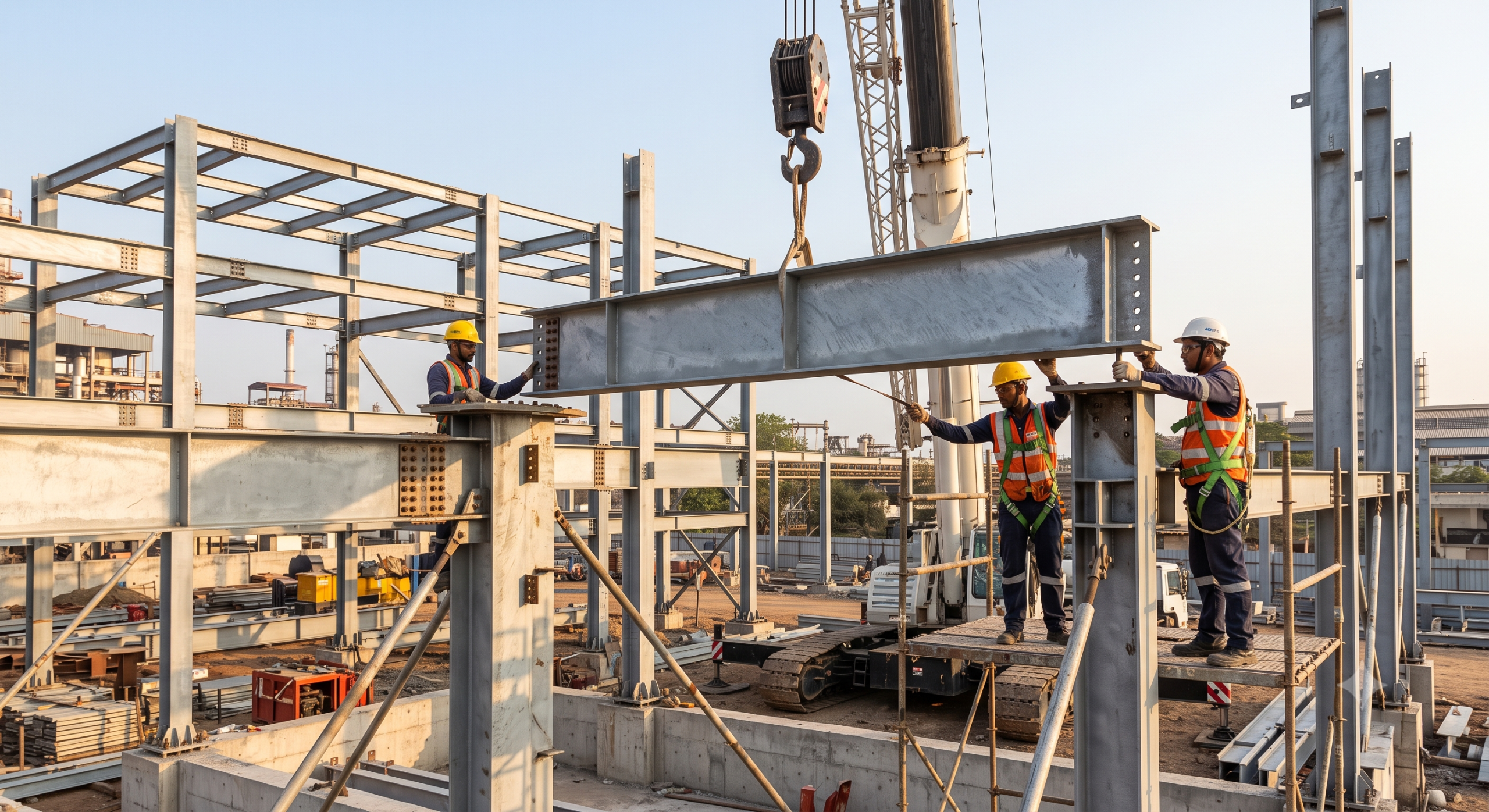
Structural steel erection is the process of assembling prefabricated components—such as columns, beams, and bracings—into a rigid framework on-site. Activities include lifting heavy sections using cranes, temporarily securing them, aligning the structure accurately, and executing permanent connections. Because tight tolerances are involved, precise positioning is vital for the structural integrity of industrial buildings, infrastructure, and large manufacturing plants.
How Does Structural Steel Erection Work?
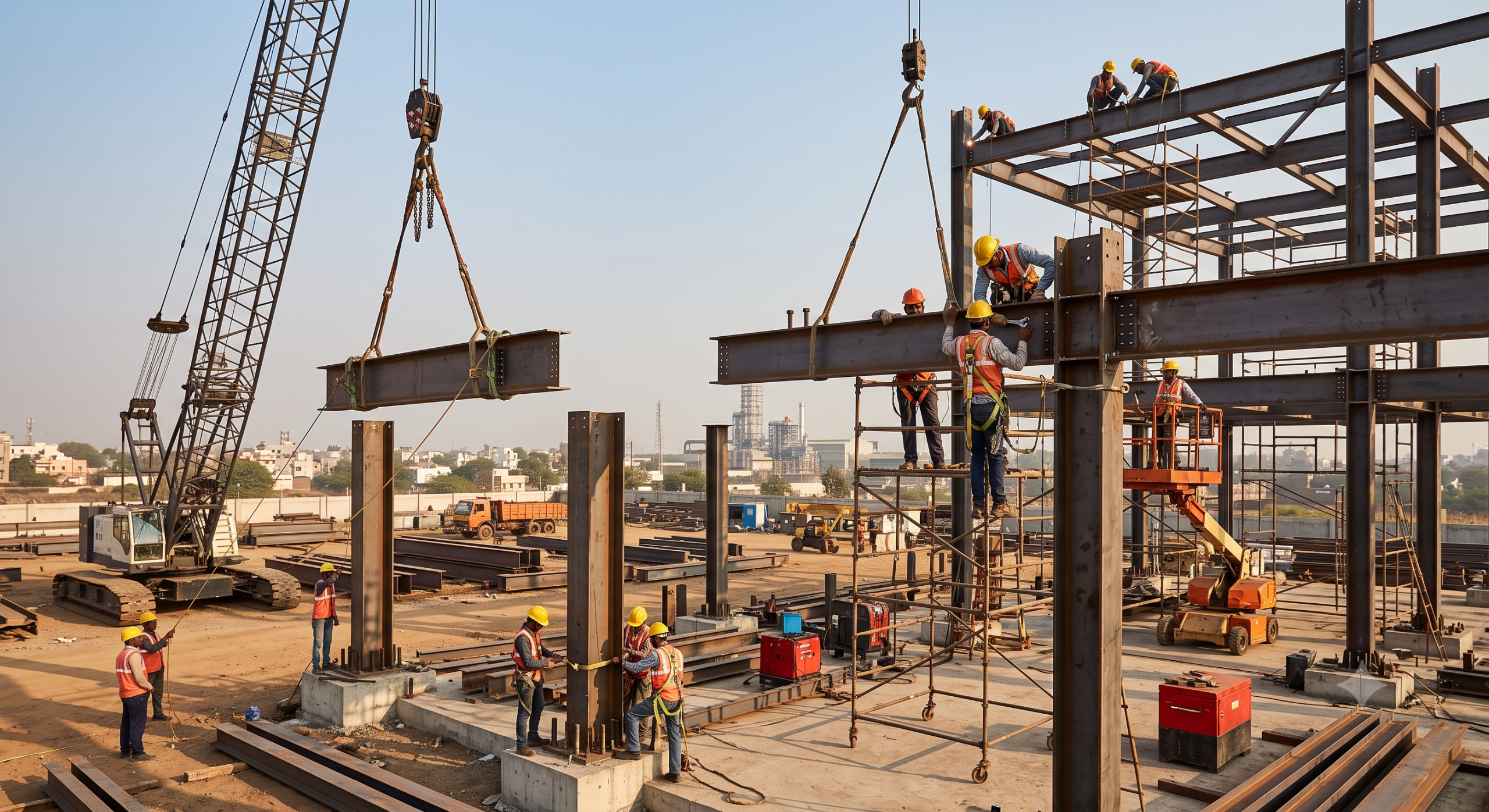
Erecting a steel structure is a highly sequenced operation. The primary stages of the erection procedure include:
- Site Preparation and Planning: The site is cleared, foundations are evaluated, and holding-down anchor bolts are verified against the erection drawings.
- Delivery and Inspection: Prefabricated steel components arrive and undergo quality inspections before being stacked strategically for safe lifting.
- Assembly and Lifting: Riggers attach heavy steel members to cranes. Some components, like roof trusses, may be pre-assembled on the ground before hoisting.
- Positioning and Temporary Stability: Columns are lifted onto base plates, and beams are connected. Temporary bracings secure the partially built structure against wind and gravity.
- Alignment and Connections: Surveyors check vertical plumbness and horizontal level. Once aligned, temporary connections are permanently secured through high-strength bolting or site welding.
- Final Inspection: The erected frame undergoes strict structural and safety inspections prior to handover.
What Are the Requirements for Steel Erection?
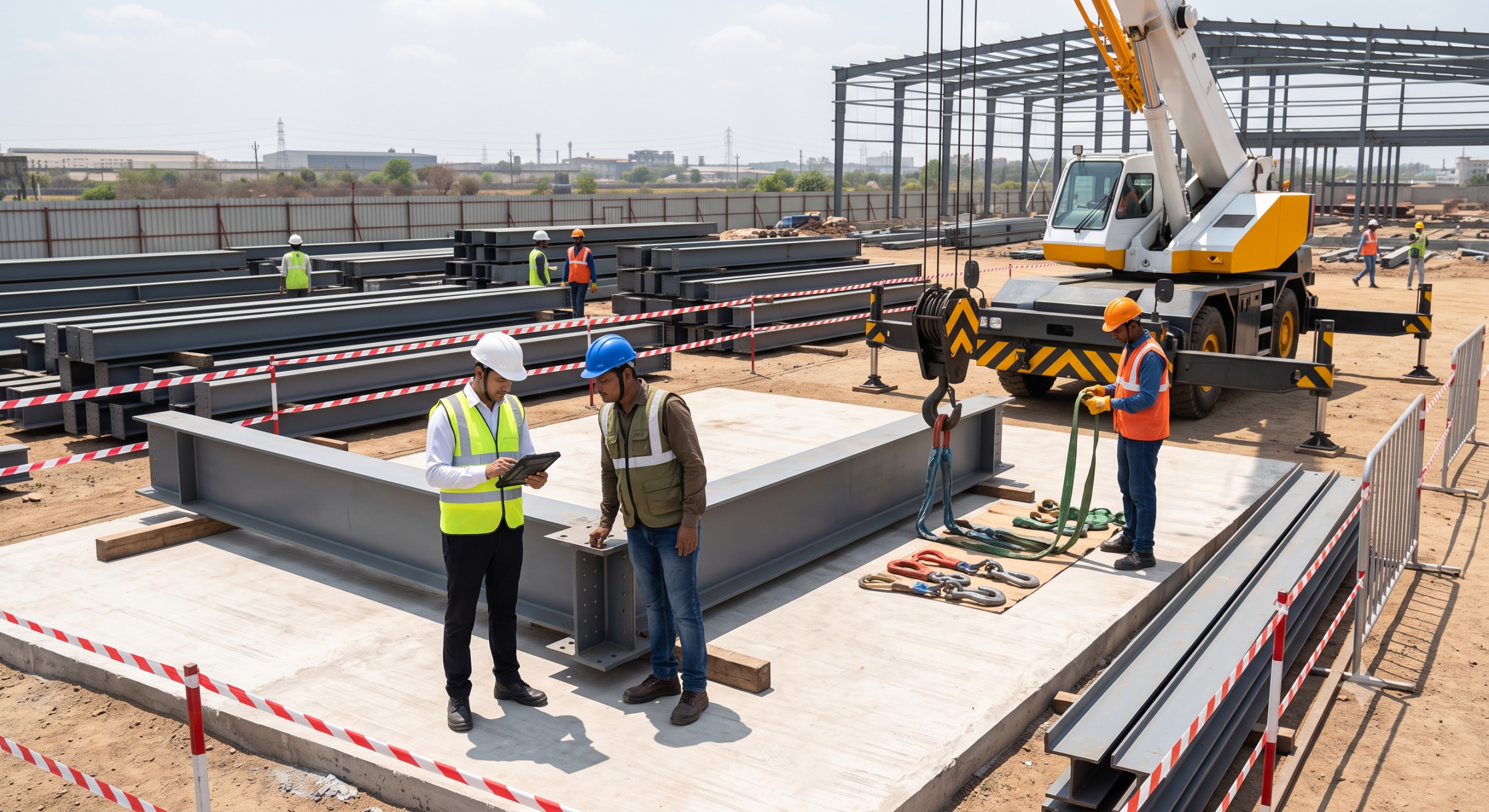
A successful steel erection project requires seamless coordination and specialized resources. The most critical requirements include:
- Proper Site Preparation: Solid ground for crane positioning and verified concrete foundations.
- Erection Drawings: Detailed sequencing plans to guide accurate component placement.
- Lifting Equipment: Certified mobile cranes and mobile elevating work platforms.
- Skilled Execution Team: Certified riggers, crane operators, structural fitters, and welders.
- Safety Procedures: Strict adherence to safety protocols and the use of standard fall protection.
At Mandal Group, our technical teams ensure these requirements are met safely and efficiently on every industrial site.
What Are the Different Types of Steel Erection?
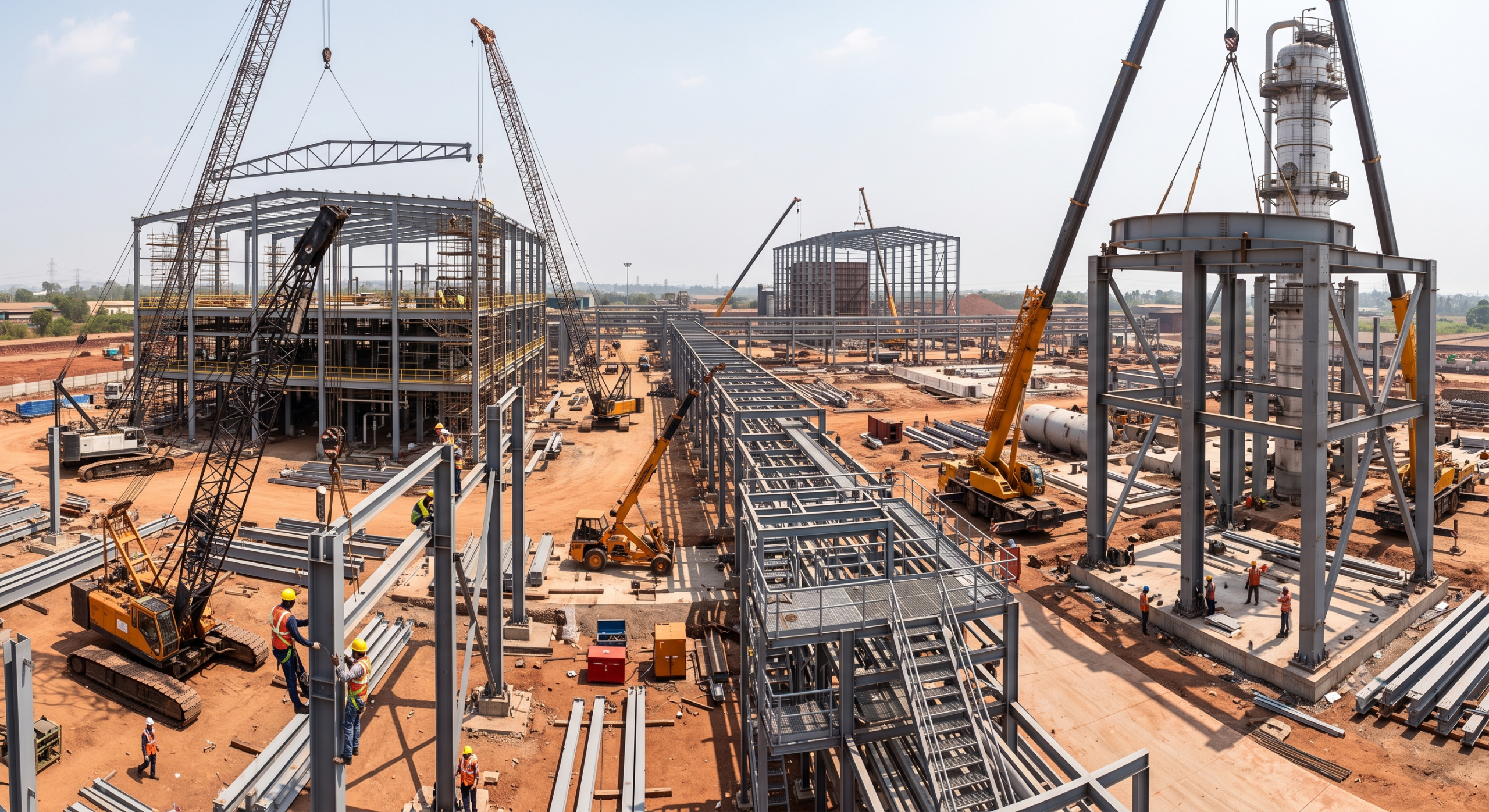
While fundamental engineering principles remain identical, structural steel erection can be categorized by the specific construction methodology used:
- Piece-by-Piece Erection: The most common approach, where individual columns and beams are lifted and bolted sequentially.
- Pre-Assembly Erection: Large sections, such as heavy trusses or modules, are assembled on the ground and lifted as a single unit to reduce working-at-height risks.
- Braced vs. Continuous Frames: Erection techniques vary slightly depending on whether the structure utilizes diagonal bracings for stability or relies on rigid, moment-resisting connections.
Method Statements & Safety in Structural Steel Erection.
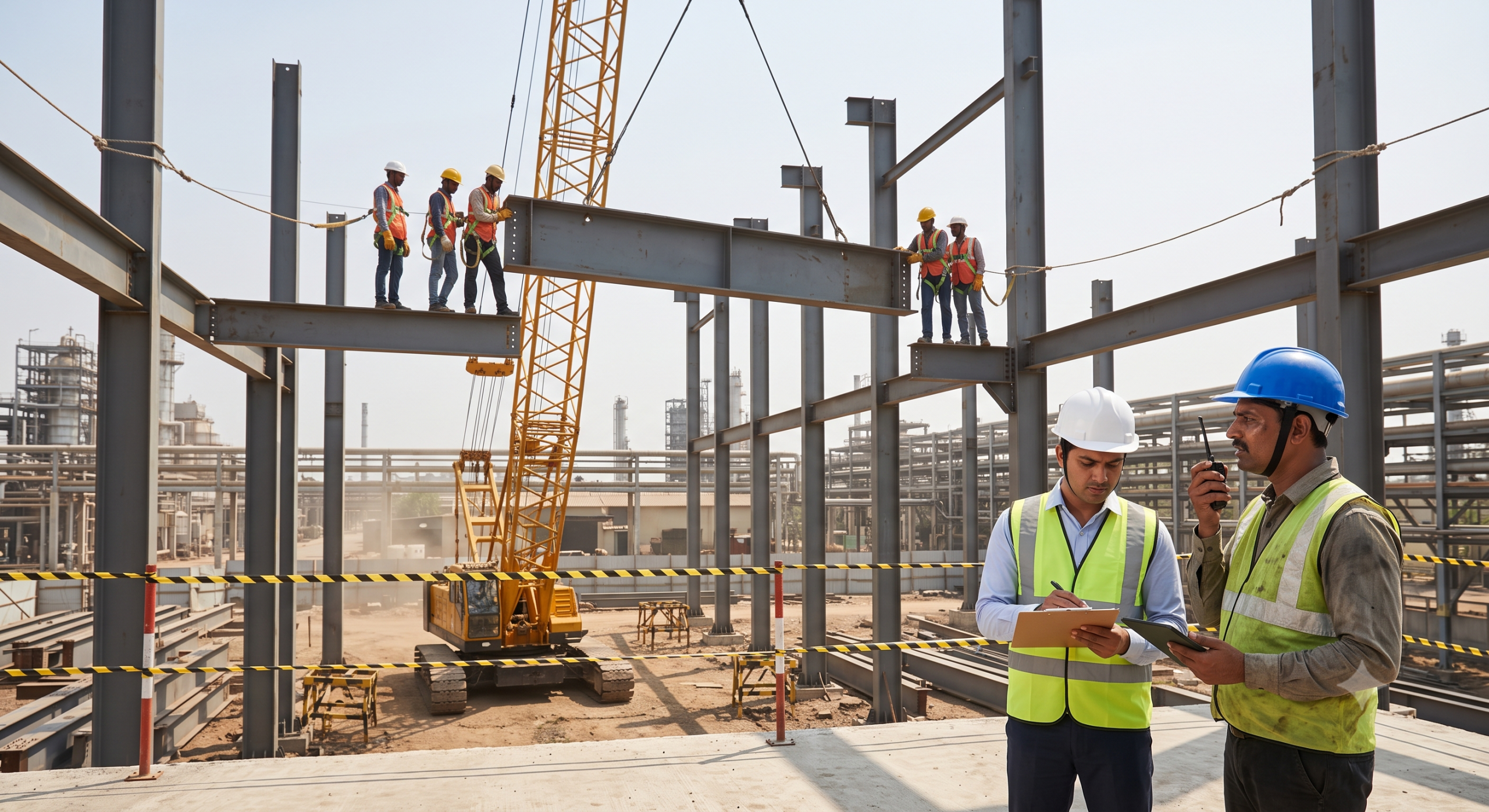
A method statement for structural steel erection is a formal planning document that establishes exactly how lifting and assembly activities will be executed safely. It details the step-by-step sequence, required equipment, and project-specific risk assessments.
Steel erection involves significant risks. Method statements mitigate common hazards, including:
- Working at Height: Managed through safety harnesses and secure edge protection.
- Lifting Operations: Addressed by load calculations and the use of certified slings.
- Falling Objects: Prevented by securing tools and establishing exclusion zones.
- Unstable Components: Controlled by installing temporary bracings before releasing crane lines.
Why Proper Structural Steel Erection Matters.
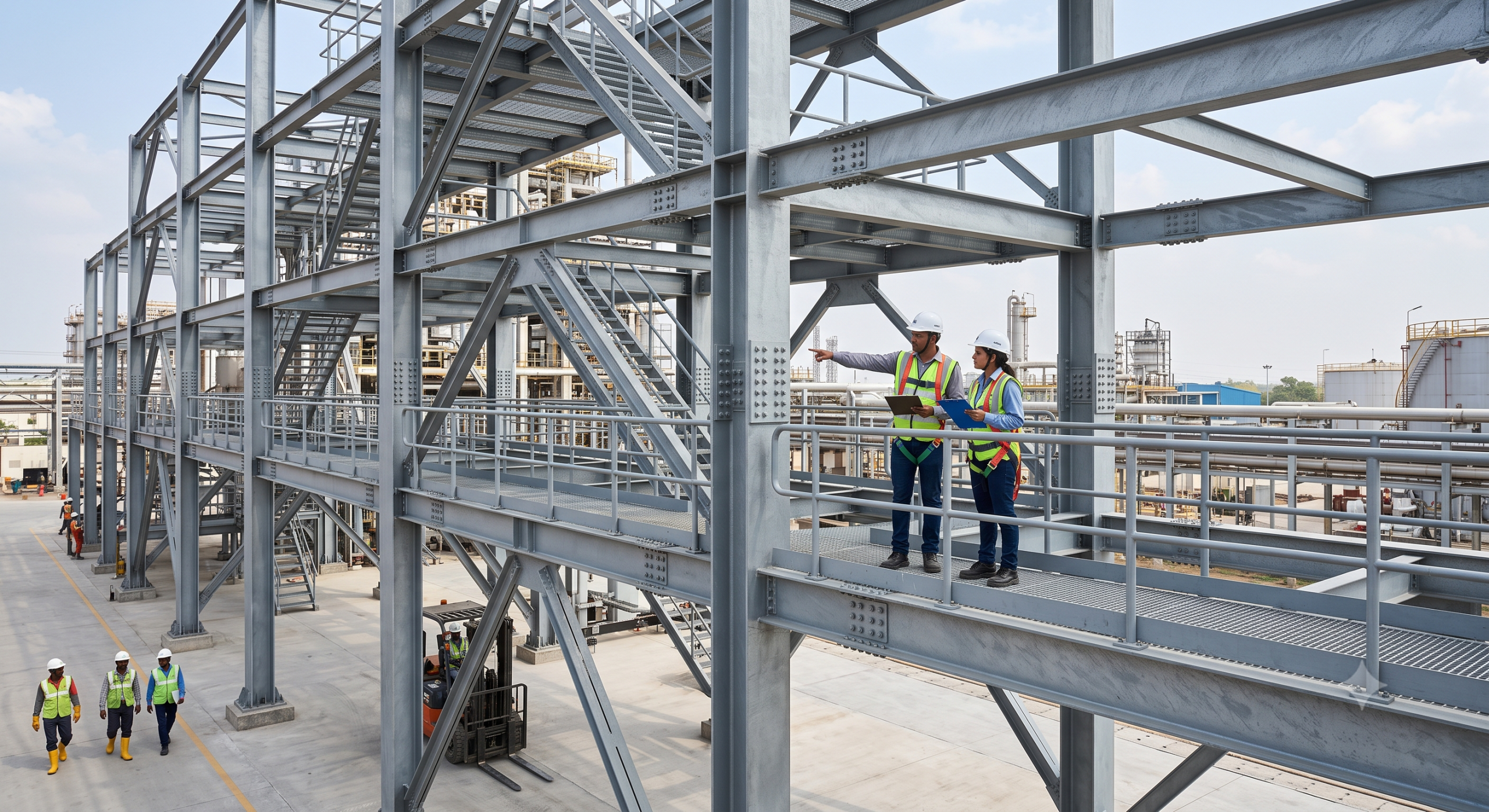
The structural integrity of an industrial facility depends entirely on precise steel erection. Accurate alignment ensures that the building’s load-bearing capacity performs as engineered. Stable connections protect against dynamic loads, vibrations, and severe weather. Furthermore, professional execution and proper sequencing minimize costly site delays, reduce rework, and protect construction personnel. Tight coordination between engineering and site teams guarantees a durable, compliant facility.
Planning a heavy industrial or plant construction project? Contact Mandal Group today to discuss your structural steel erection requirements and ensure your framework is built with absolute precision and safety.
Want to see our heavy engineering teams in action? Follow @mandalgroups on Instagram for live site updates and structural steel erection showcases across India.
Frequently Asked Questions About Structural Steel Erection.
- What is structural steel erection?
Structural steel erection is the process of lifting, positioning, and connecting prefabricated steel members—like beams and columns—to build a stable structural framework. It is the core phase in creating the skeleton for industrial plants and infrastructure projects.
- What is the erection procedure for steel structures?
The procedure begins with verifying foundations, followed by organizing steel components. Cranes lift the members into position, where they are temporarily braced and aligned for vertical plumbness. Finally, the joints are permanently secured through bolting or welding.
- What are the requirements for steel erection?
Safe steel erection requires a level site with fully cured concrete foundations, certified lifting equipment, and detailed erection drawings. It necessitates a skilled workforce operating under strict safety protocols and approved method statements.
- What are the method statements for structural steel erection?
A method statement is a detailed safety and operational plan. It establishes how erection will be executed, detailing lifting equipment, the assembly sequence, and specific risk control measures to protect workers.
- What are the most common hazards in steel erection?
Critical hazards include falling from height, swinging loads, crane instability, and the collapse of unsecured steel members. Strict safety planning, temporary bracing, and mandatory fall protection are essential to control these risks.
