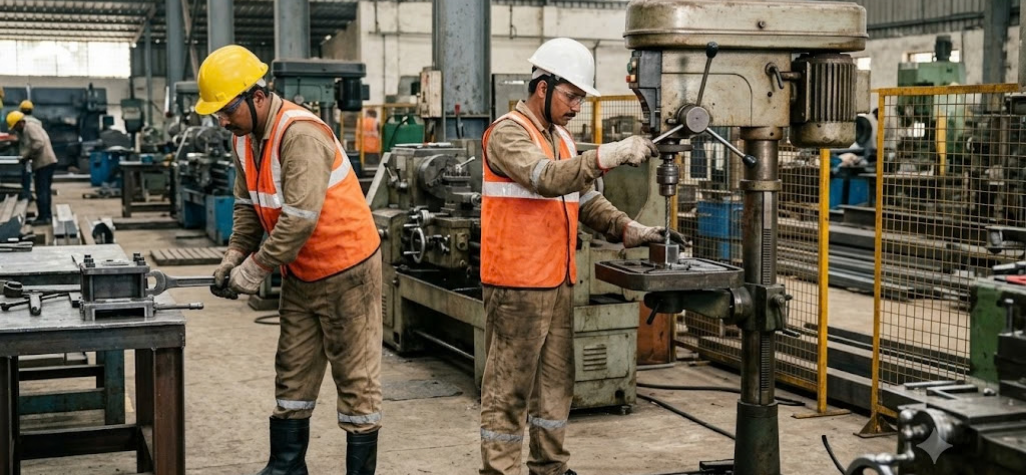
Equipping an industrial workforce with ill-fitting or substandard safety gear exposes businesses to severe workplace hazards, regulatory non-compliance, and costly downtime. Procurement teams and safety officers frequently struggle with inconsistent batch quality, delayed bulk deliveries, and unverified product claims across diverse factory zones. When a single defect in a harness or respirator can lead to an on-site incident, vendor selection cannot be treated as a casual purchase.
Securing the right personal protective equipment requires partnering with dependable ppe suppliers in india who understand industrial hazards and deliver consistent, compliant gear. This guide covers seven critical factors B2B buyers must evaluate in 2026 to ensure workforce protection, reliable delivery cycles, and long-term procurement efficiency.
What Is PPE and Why Is It Important?
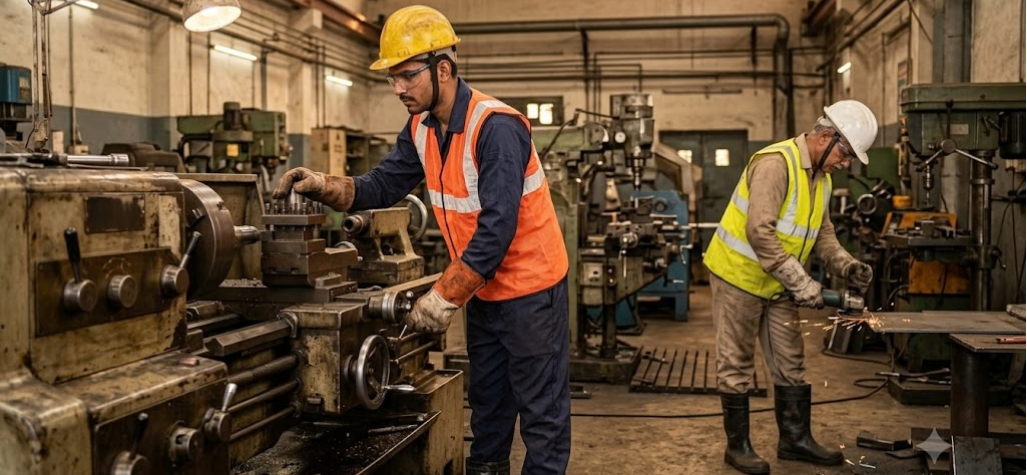
Personal Protective Equipment (PPE) refers to specialized wearable gear designed to protect workers from serious workplace injuries or illnesses resulting from contact with chemical, physical, mechanical, electrical, or thermal hazards. Its primary purpose is to create a physical barrier between the worker and operational risks such as falling objects, airborne dust, high noise levels, sparks, and intense heat.
PPE represents the final line of defense within a comprehensive hierarchy of safety controls. While engineering and administrative controls must eliminate or isolate hazards first, appropriate PPE reduces the severity of residual exposure. However, PPE does not make a worker invincible; it must be selected precisely for the specific hazard and task, fitted correctly, and maintained diligently to be effective.
What Do PPE Suppliers in India Provide?
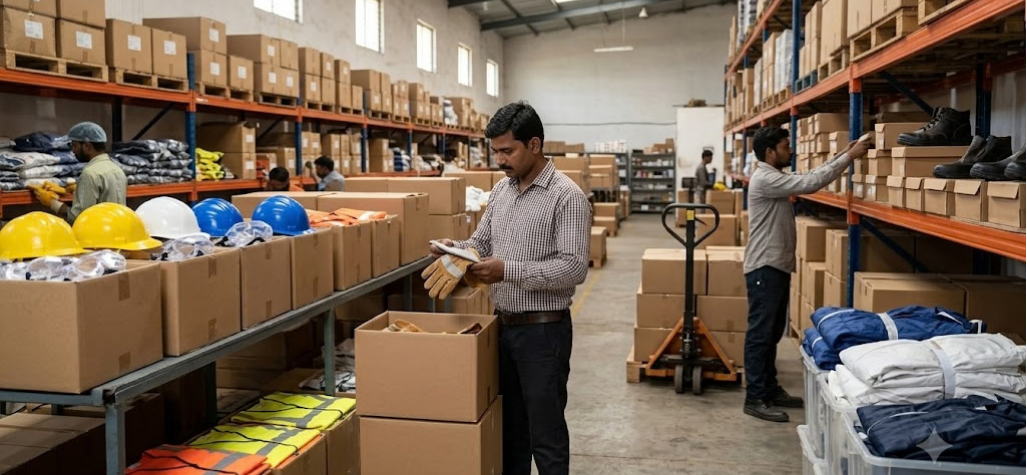
PPE suppliers distribute specialized protective gear for commercial, infrastructure, and heavy manufacturing facilities. Their product offerings commonly include:
- Head and Face: Industrial safety helmets, face shields, and welding visors.
- Eye and Hearing: Impact-resistant safety goggles, spectacle frames, earplugs, and earmuffs.
- Respiratory: Particle-filtering masks, half-face respirators, and chemical cartridges.
- Hand and Foot: Cut-resistant gloves, chemical-handling gloves, and steel-toe safety shoes.
- Body and Fall Protection: High-visibility jackets, flame-retardant coveralls, and full-body harness systems.
Capabilities vary across vendors. While some act solely as local stockists, others provide manufacturing, custom branding, technical product guidance, bulk replenishment schedules, and centralized procurement support for multi-location enterprises.
7 Things to Check Before Choosing PPE Suppliers
- Product Quality and Specifications
Examine the base materials, build quality, ergonomic design, and sizing options. PPE must match the exact operational hazard it is intended to counter; generic gear rarely provides adequate protection in harsh environments. Review the manufacturer’s technical data sheets and user instructions to confirm performance ratings under continuous operational conditions.
- Safety Standards and Applicable Requirements
Verify that the equipment complies with the specific technical standards mandated for that product category. Check product markings, embossed symbols, and manufacturer documentation against applicable national and international regulatory frameworks. Never assume that a supplier’s broad compliance claim applies across their entire catalog.
- Certifications and Documentation
Request and verify authentic documentation, such as batch test reports, certificates of conformity, and detailed product data sheets. Legitimate suppliers readily provide batch-specific documentation verifying that the materials have undergone proper testing. Ensure that all test documentation is current, legitimate, and issued by recognized testing bodies.
- PPE Product Range
A broad product range allows industrial buyers to consolidate vendor management across different operational departments. Assess whether the supplier stocks head, eye, respiratory, hand, foot, and fall protection suited to your specific site conditions. However, prioritize depth of quality within necessary categories over an excessively wide catalog of mediocre products.
- Pricing and Total Procurement Cost
Evaluate pricing based on the total cost of ownership rather than initial unit rates. Consider material durability, required replacement frequencies, minimum order quantities (MOQs), freight charges, and packaging. The cheapest protective equipment often degrades faster, resulting in frequent re-orders and higher annual expenditure.
- Supply Capacity and Product Availability
Industrial facilities with large workforces cannot afford inventory stockouts. Evaluate the supplier’s warehouse stock levels, average lead times, and capacity to handle large bulk orders or rapid re-orders. Confirm their logistics capability to deliver consistently across scheduled plant shutdowns or unexpected demand surges.
- Supplier Support and Reliability
Choose a supplier whose team demonstrates practical product knowledge and transparent communication. A dependable partner assists in matching gear to workplace hazard assessments, provides clear quotations without hidden freight fees, coordinates timely deliveries, and resolves defective batch claims promptly.
What Types of Personal Protective Equipment Are Available?
PPE Category | Common Equipment | Typical Protection Purpose |
Head Protection | Industrial safety helmets, bump caps | Protection against falling objects and structural impact |
Eye Protection | Safety goggles, polycarbonate glasses | Protection from flying particles, dust, and chemical splashes |
Face Protection | Face shields, arc flash shields | Full-face coverage against liquid splashes, heat, and sparks |
Hand Protection | Cut-resistant, leather, chemical gloves | Shielding hands from abrasions, punctures, burns, and solvents |
Foot Protection | Steel-toe safety shoes, antistatic boots | Protection from crushing, sole punctures, and slip hazards |
Hearing Protection | Foam earplugs, noise-canceling earmuffs | Reduction of hazardous workplace noise exposure |
Respiratory Protection | Particulate respirators, cartridge masks | Filtration of toxic dust, fumes, vapors, and gases |
Body Protection | High-visibility vests, chemical suits | Visual conspicuity and skin defense against hazards |
Fall Protection | Full-body safety harnesses, lanyards | Prevention of free falls and injury during work at height |
Note: PPE selection must always be based on an evaluated hazard profile, job duration, physical fit, and product-specific performance ratings. No single product suits all environments.
How to Check PPE Quality and Safety Standards?
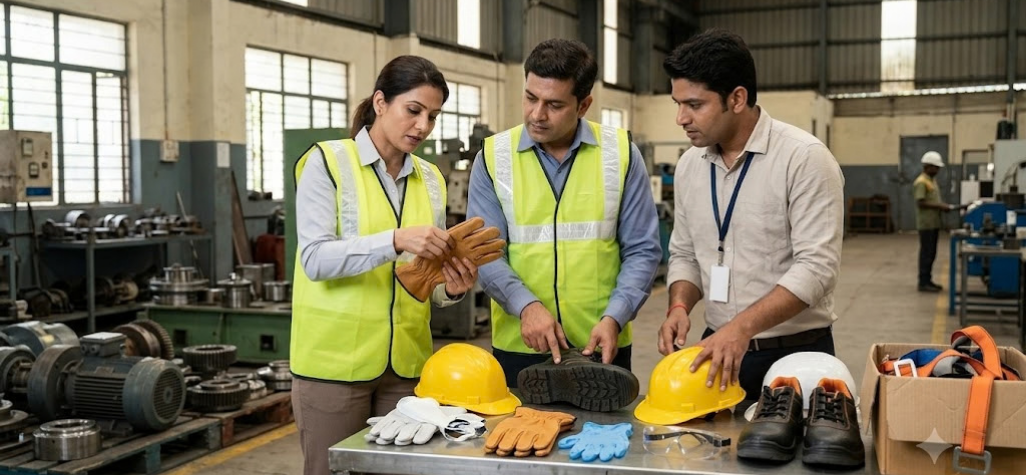
Procurement teams should adopt a systematic verification checklist prior to issuing bulk purchase orders:
- Examine product technical datasheets for exact material composition.
- Confirm distinct, legible regulatory markings and batch numbers stamped on the products.
- Request physical samples to test worker comfort, ergonomics, and functional fit.
- Verify batch test reports against the manufacturer’s declared technical parameters.
- Review proper usage instructions, storage restrictions, and shelf-life indications.
- Check supplier warranty policies covering manufacturing defects.
Visual inspection alone does not confirm compliance. Technical documentation and material integrity tests must validate every product tier.
Why Are PPE Certifications Important?
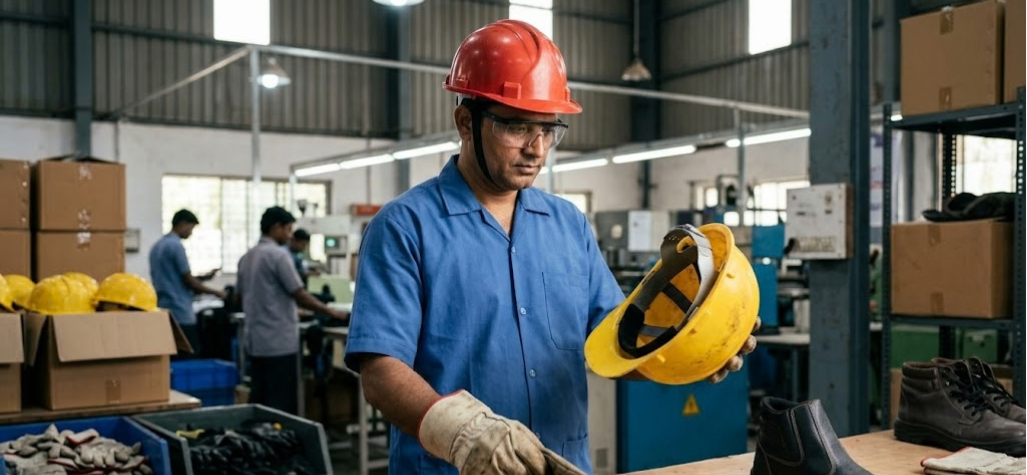
Certifications provide verifiable proof that protective equipment has been tested and evaluated against rigorous technical criteria. They bridge the gap between commercial claims and actual laboratory performance under simulated industrial stress.
However, valid documentation is only effective when paired with practical execution. Even thoroughly certified equipment will fail to protect personnel if it is improperly fitted, stored in degrading conditions, or used beyond its operational lifespan. Always verify current, relevant documentation from your supplier to ensure the certified standards match your plant’s specific operational hazards.
How to Choose PPE for Different Industrial Work Environments?
Work Environment | Potential Hazards | Recommended PPE Focus |
Steel Plant | Extreme heat, molten splashes, mechanical impact | High-temperature gloves, safety shoes, face shields, rigid helmets |
Construction Site | Falling debris, dust, heavy machinery | High-visibility clothing, safety helmets, steel-toe boots, eye protection |
Manufacturing Plant | Machine pinch points, continuous noise, metal shavings | Cut-resistant gloves, ear protection, safety glasses, safety footwear |
Welding Area | Optical radiation, hot sparks, toxic fumes | Welding helmets with proper filter shades, leather aprons, respirators |
Warehouse | Forklift traffic, falling boxes, repetitive handling | High-visibility vests, safety shoes, grip gloves, light bump caps |
Maintenance Work | Variable mechanical, electrical, and chemical hazards | Hazard-matched PPE selected based on specific daily permits |
How Much Does Industrial PPE Cost in India?
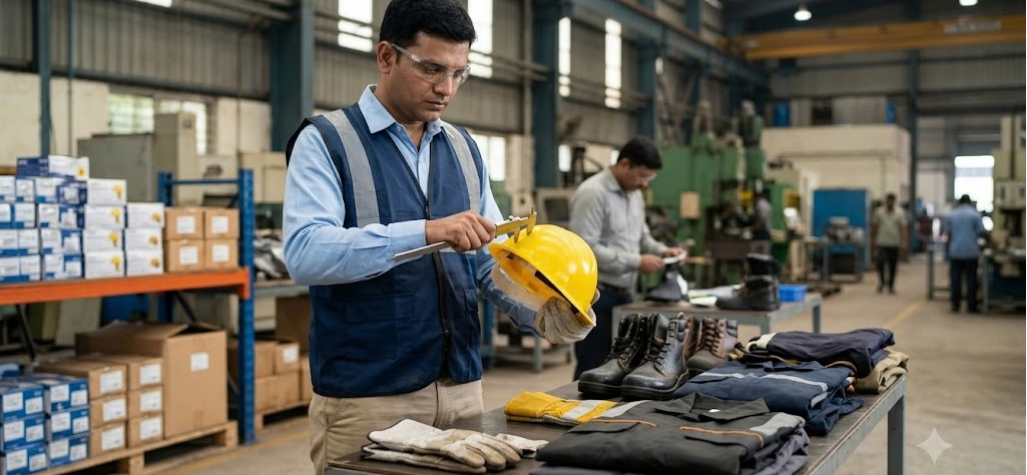
Industrial PPE pricing is determined by product category, material grade, technical performance ratings, and compliance requirements. Bulk procurement volumes, customization requirements (such as company branding), specialized packaging, and interstate delivery logistics also influence total invoice value.
Rather than selecting quotes based strictly on the lowest unit price, procurement managers should evaluate the overall value proposition. Durable, well-fitted PPE reduces replacement frequency and improves worker compliance, resulting in lower operational costs over time.
What Should Businesses Check Before Buying PPE in Bulk?
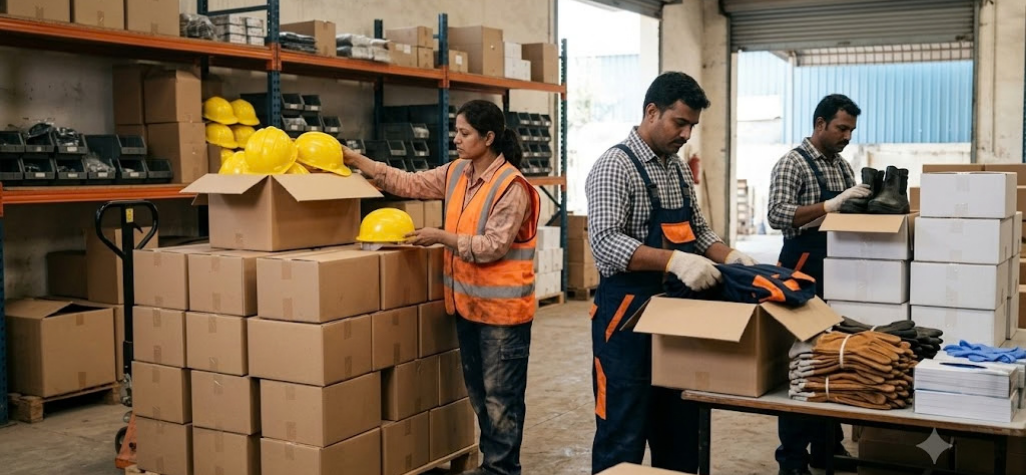
- Accurate hazard assessments mapping out necessary protection classes.
- Detailed employee size distributions to prevent unusable inventory.
- Minimum order quantities, volume discounts, and payment terms.
- Lead times for initial dispatch and recurring replenishment orders.
- Availability of physical pre-production samples for field evaluation.
- Safe packaging specifications ensuring protection against transit damage.
- Clear contractual terms covering batch rejections or defective replacements.
How to Choose a Reliable PPE Supplier in India?
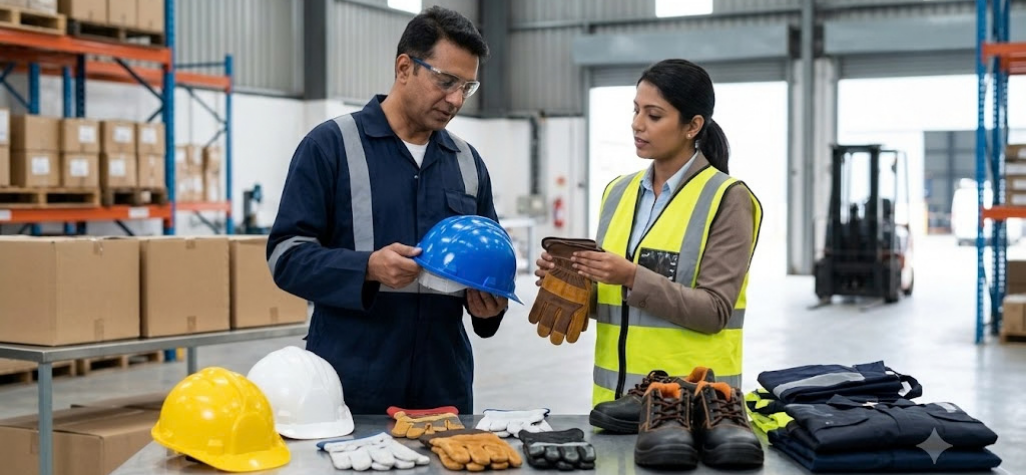
Evaluate prospective suppliers by reviewing their established track record with industrial and manufacturing buyers. A reliable vendor maintains consistent inventory levels, provides complete regulatory documentation, and offers clear, upfront pricing structures.
Assess their technical communication: do their representatives understand workplace safety parameters, or do they simply push high-margin stock? Prioritize suppliers that deliver reliable logistics schedules, provide consistent product quality across repeat orders, and maintain transparent after-sales communication.
Mandal Group – PPE Manufacturing and Supply.
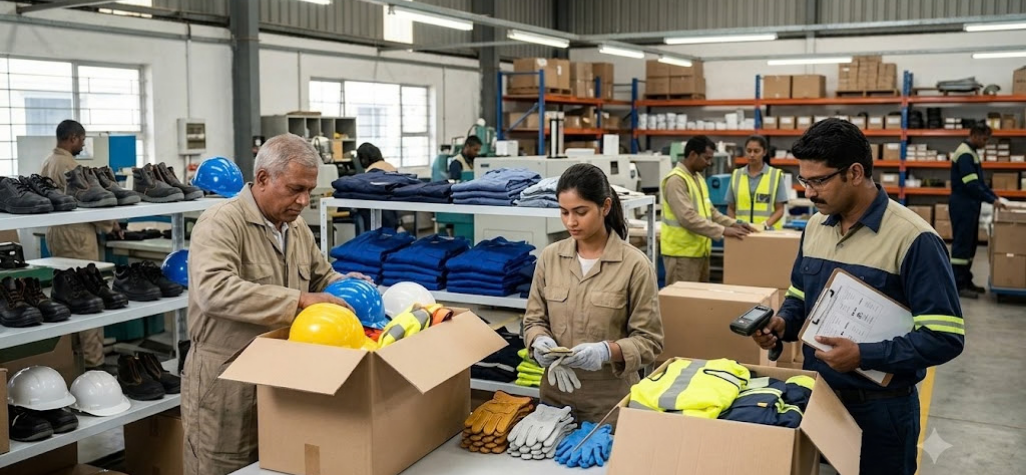
At Mandal Group, through Mandals Safety Products Pvt. Ltd., we manufacture and supply industrial personal protective equipment engineered for rigorous workplace environments. We understand the complex safety challenges faced by steel plants, manufacturing facilities, EPC contractors, and infrastructure sites across India.
Our operations focus on providing dependable, hazard-matched protective gear, including head, foot, hand, and fall protection equipment for bulk industrial procurement. By prioritizing material integrity, strict production standards, and reliable nationwide delivery schedules, we assist safety managers and procurement teams in maintaining compliant, well-equipped workforces. Contact Mandal Group today to review your workplace PPE requirements and receive transparent, bulk-supply quotations.
(Explore our related services in [Industrial Maintenance Services] and [Industrial Equipment Suppliers] for complete plant support.)
Protect your workforce with verified industrial safety gear. Contact Mandal Group today to discuss your bulk PPE requirements, request technical datasheets, and secure dependable safety equipment supply across India.
Frequently Asked Questions
- What do PPE suppliers in India provide?
PPE suppliers provide personal protective equipment designed for industrial hazards. This includes safety helmets, protective eyewear, high-visibility clothing, safety footwear, cut-resistant gloves, respiratory protection, and fall-arrest harnesses, alongside bulk procurement coordination and technical guidance.
- How do I choose a reliable PPE supplier?
Choose a supplier by evaluating their product quality, authentic safety certifications, and capacity to handle regular bulk orders. Verify their delivery timelines, transparent pricing, and technical ability to match protective gear to your facility’s specific hazard assessments.
- What types of PPE are commonly used in industrial workplaces?
Common industrial PPE includes safety helmets for impact protection, steel-toe shoes for crush resistance, safety goggles for airborne debris, earplugs for noise control, and specialized gloves for handling mechanical, thermal, or chemical risks.
- How can I check PPE quality and certification?
Verify quality by reviewing the manufacturer’s technical data sheets, batch test reports, and required regulatory markings embossed directly on the equipment. Always request physical samples to inspect material finish, seam strength, and ergonomic fit.
- How much does industrial PPE cost in India?
Industrial PPE costs vary widely depending on the equipment type, technical specifications, material durability, and order volume. Total procurement cost also includes freight, applicable taxes, and replacement cycles, rather than just the initial unit purchase price.
- How do I choose PPE for different workplace hazards?
Select PPE by conducting a comprehensive site hazard assessment. Identify specific risks—such as impact, noise, chemical exposure, or extreme temperatures—and select equipment engineered and certified to withstand those precise conditions.
- What should I check before buying PPE in bulk?
Before placing bulk orders, confirm workforce sizing requirements, verify batch test certificates, inspect sample pieces, and agree upon delivery schedules. Ensure the contract clearly defines warranty terms, minimum quantities, and return policies for defective items.
