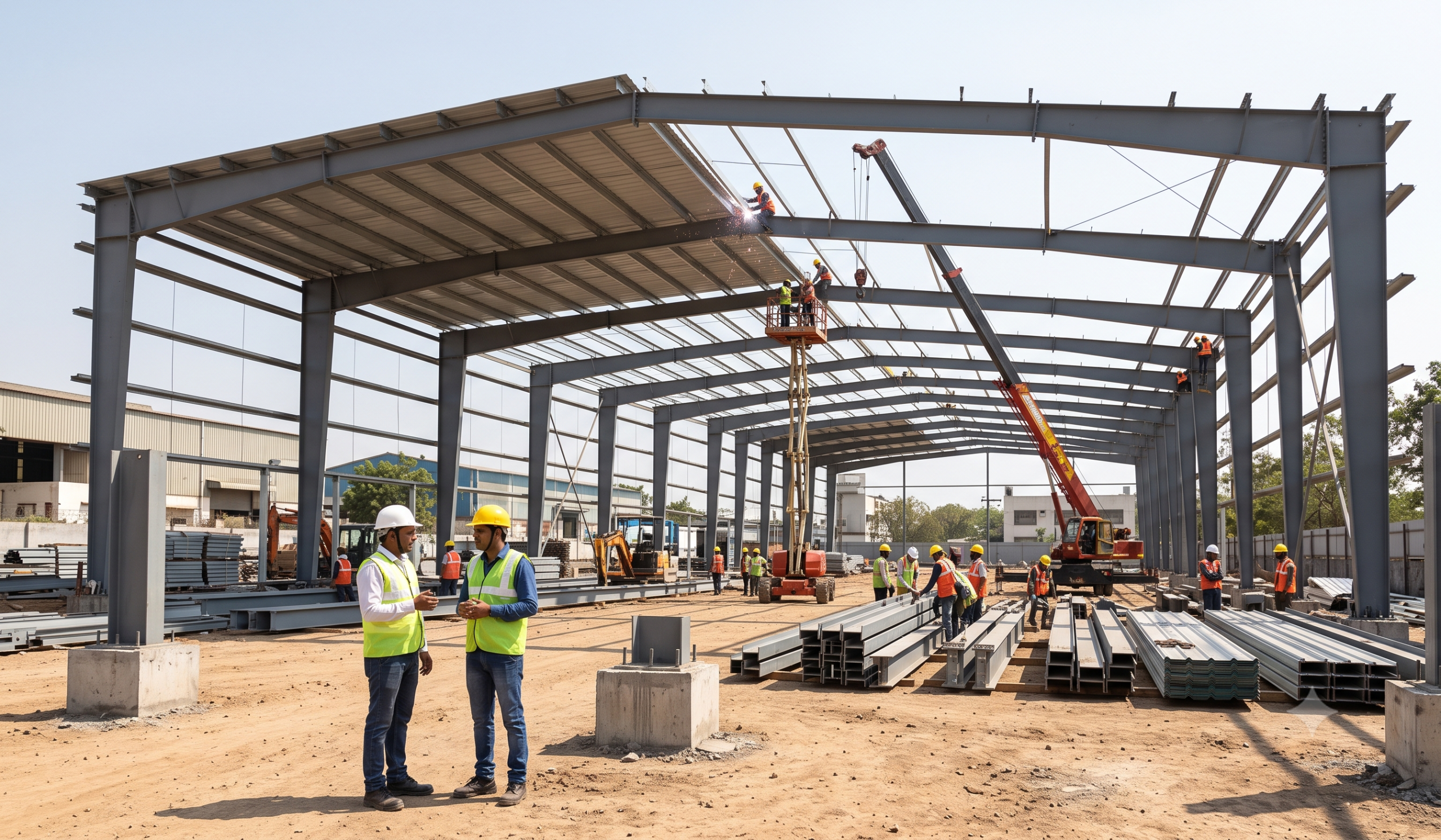
Choosing the wrong manufacturer for your industrial building project can quickly turn into a costly nightmare. A poorly executed project often results in compromised structural quality, incorrect design specifications, and frustrating site delays. When material issues and installation problems arise, project costs skyrocket, and operations halt. Worse, dealing with difficult after-sales support can leave your facility vulnerable for years.
Selecting the right PEB manufacturers in India requires much more than simply comparing the lowest quotations. An industrial shed or factory is a major capital investment that demands precision engineering and flawless execution. This guide explores seven key factors every procurement team and project manager must evaluate before selecting a manufacturing partner, ensuring your next pre-engineered building is delivered safely, on time, and within budget.
What Are PEB Buildings and How Do They Work?
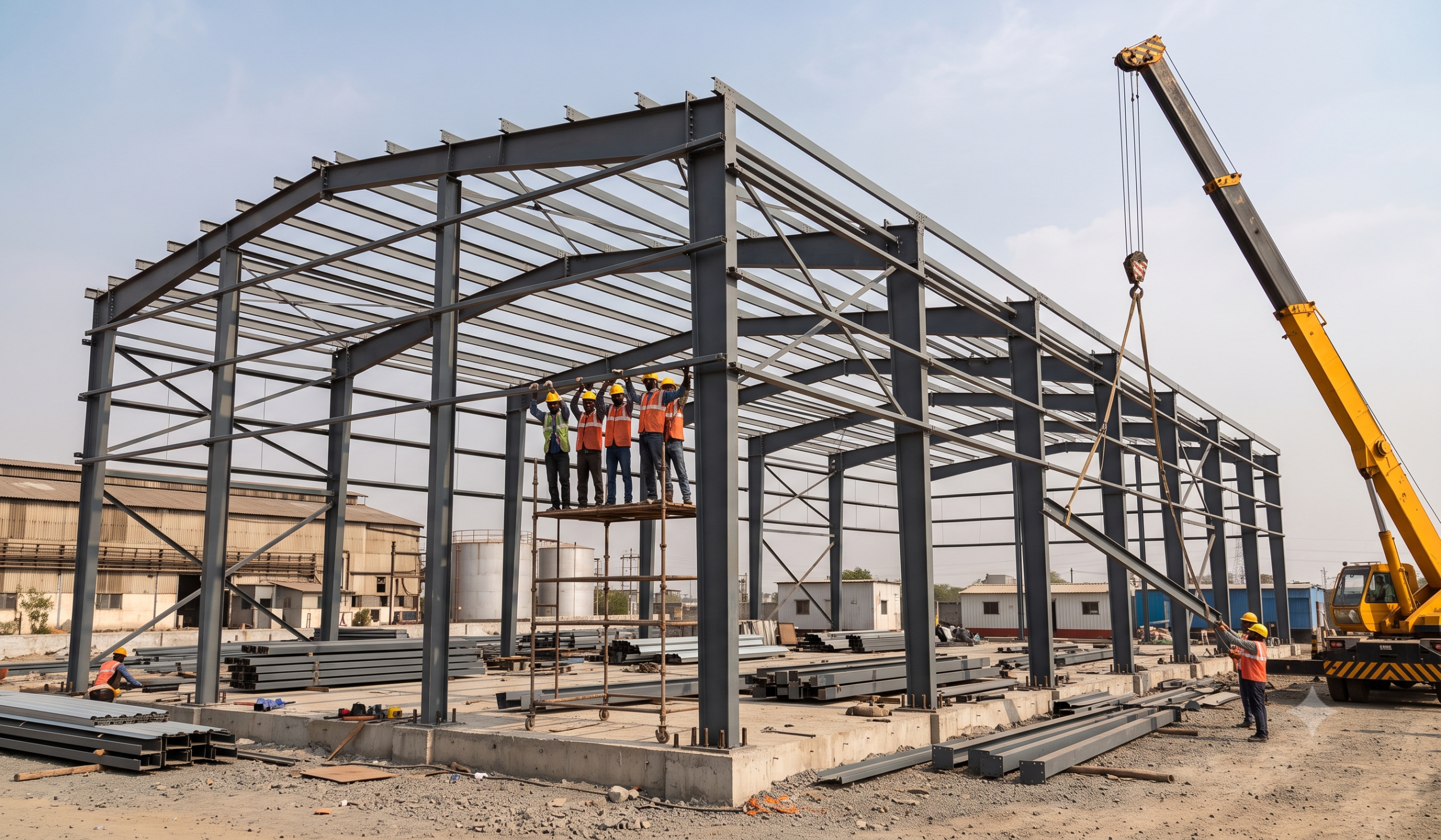
Pre-Engineered Buildings (PEBs) are modern, custom-designed steel structures. Unlike traditional construction where heavy fabrication happens on-site, a PEB is engineered and manufactured inside a controlled factory environment.
The process begins with structural engineers designing the building to match specific load and dimension requirements. Once the design is approved, raw steel is cut, welded, and shaped into primary framing components like columns and rafters. These finished components, along with roofing sheets and wall cladding, are transported to the construction site. Finally, an erection team assembles the structure by bolting the components together. This off-site manufacturing method drastically reduces construction time while ensuring high precision.
What Do PEB Manufacturers in India Provide?
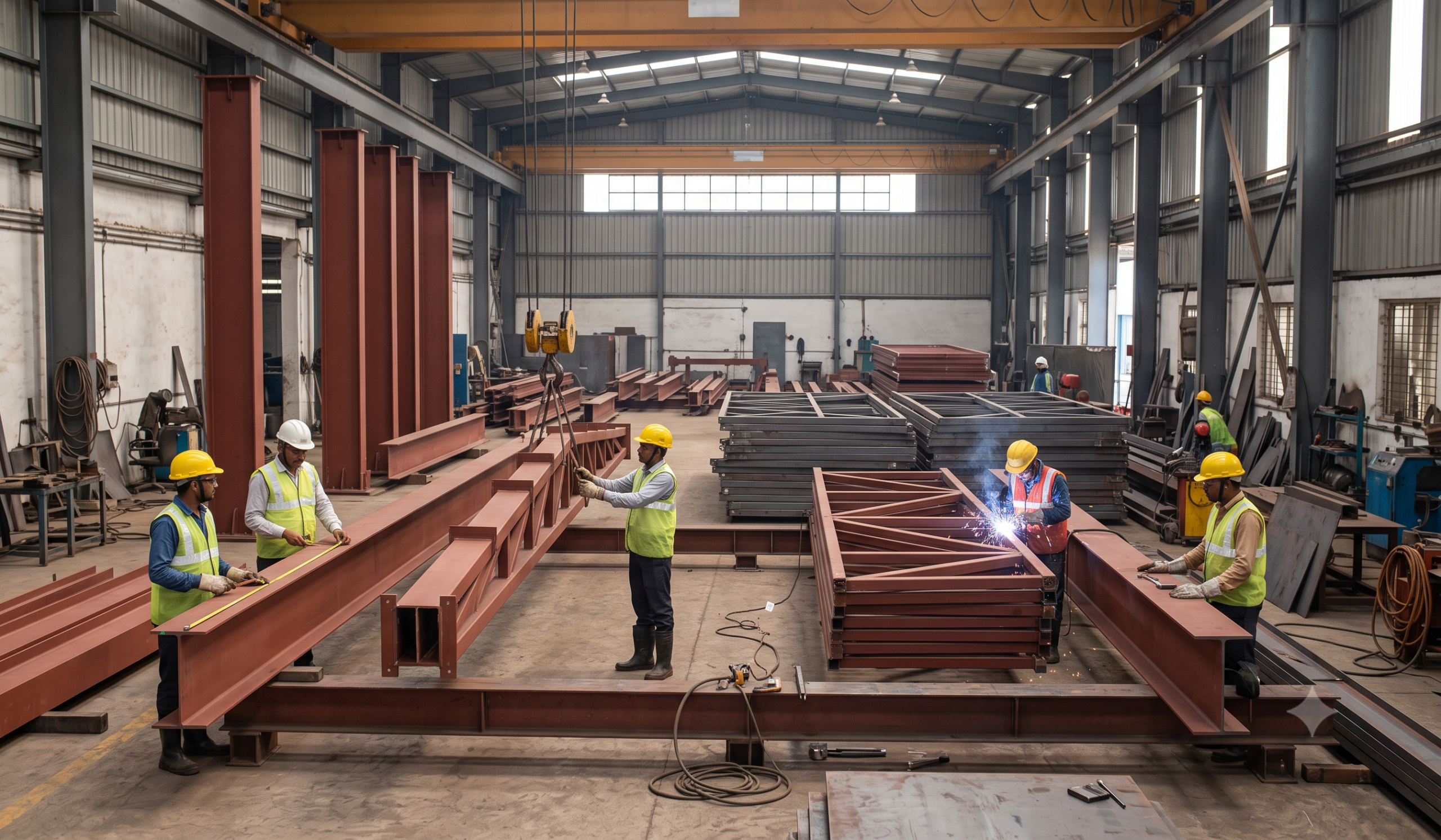
A professional PEB manufacturer delivers a comprehensive range of products and services across the project lifecycle. While the exact scope varies by manufacturer and project requirements, they typically provide:
- PEB design and structural engineering
- Primary and secondary steel fabrication
- Roofing systems and wall cladding
- Structural components like purlins and girts
- Accessories such as doors, windows, and skylights
- In-house manufacturing and quality testing
- Transportation logistics to the project site
- Site erection and installation services
- Ongoing project management support
7 Key Factors to Consider When Choosing PEB Manufacturers
- Manufacturing Quality
The integrity of your building relies heavily on fabrication accuracy. High manufacturing quality ensures precise welding, proper surface finishing, and strict quality control, which are vital for preventing structural failures.
- Design and Engineering Capability
Proper structural design guarantees that the building can safely withstand wind, seismic, and operational loads. Project-specific engineering optimizes steel usage, keeping costs efficient without compromising safety.
- Experience With Similar Projects
A manufacturer with relevant project experience understands the unique challenges of your industry. Whether building a logistics warehouse or a heavy manufacturing plant, experienced teams anticipate execution bottlenecks.
- Material Quality and Specifications
Buyers must verify the grade of structural steel, the thickness of roofing and cladding, and the quality of anti-corrosive coatings. Even small components like high-strength fasteners play a critical role in long-term stability.
- Manufacturing and Delivery Timeline
Industrial projects run on tight schedules. Realistic production and delivery timelines ensure that site erection can commence smoothly without causing costly contractor delays.
- Installation and Erection Support
A perfectly manufactured building can still fail if poorly assembled. Proper site erection and coordination directly affect project safety, structural quality, and overall completion time.
- After-Sales and Technical Support
Post-project communication is vital. Reliable manufacturers provide technical assistance, maintenance guidance, and replacement support long after the building is commissioned.
How to Check the Quality of PEB Materials?
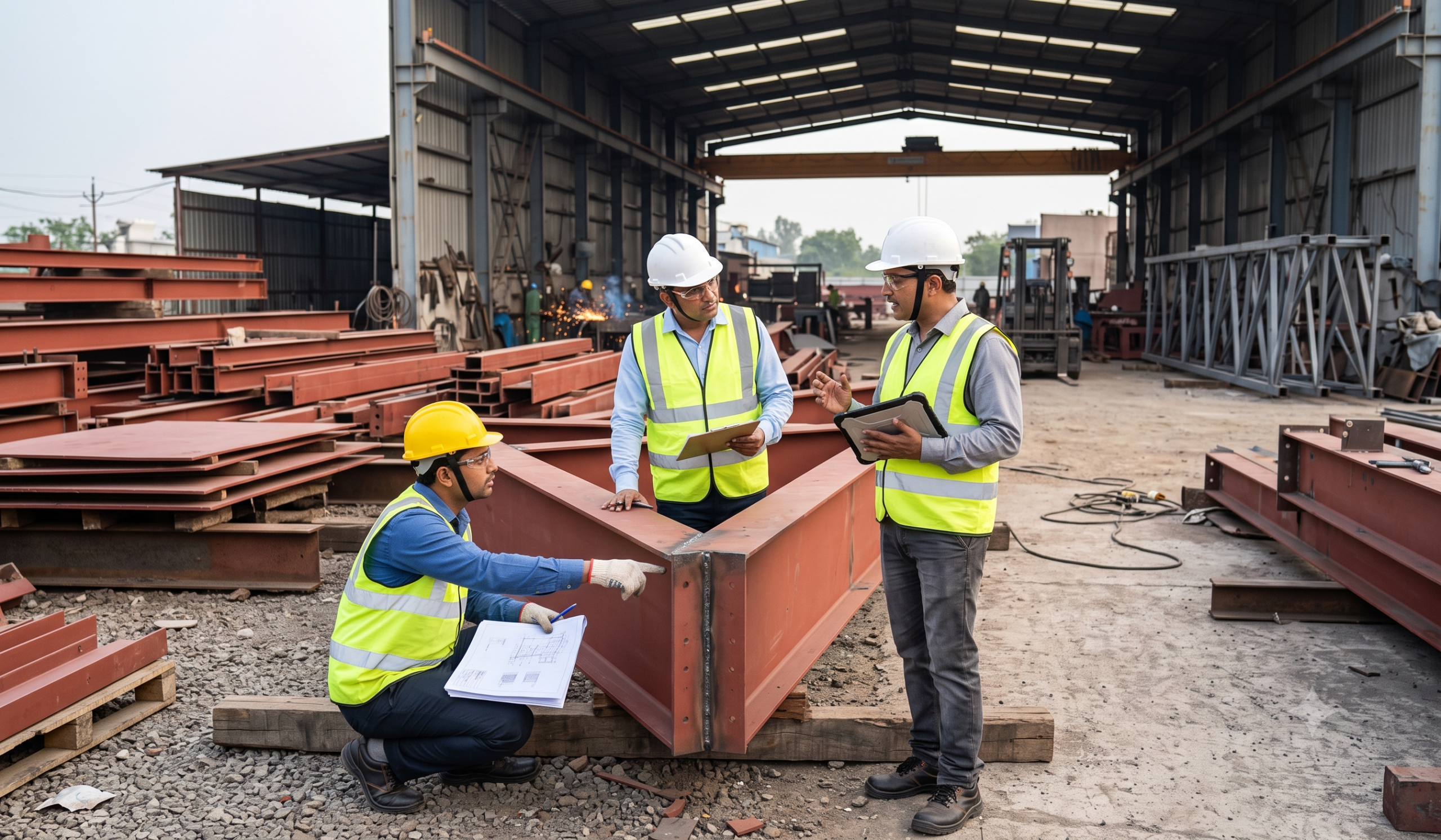
Buyers should actively verify material specifications before finalizing a contract. To ensure durability, check the exact grade of the primary structural steel being proposed. For roofing and cladding, verify the material type, such as color-coated Galvalume, and check the specific coating thickness to prevent premature corrosion.
Always ask for details on the high-strength fasteners and connection components, as these hold the entire structure together. Before taking delivery, request fabrication quality reports, material test certificates, and factory inspection documentation to ensure the raw materials match the promised engineering specifications.
Why Is PEB Design and Engineering Important?
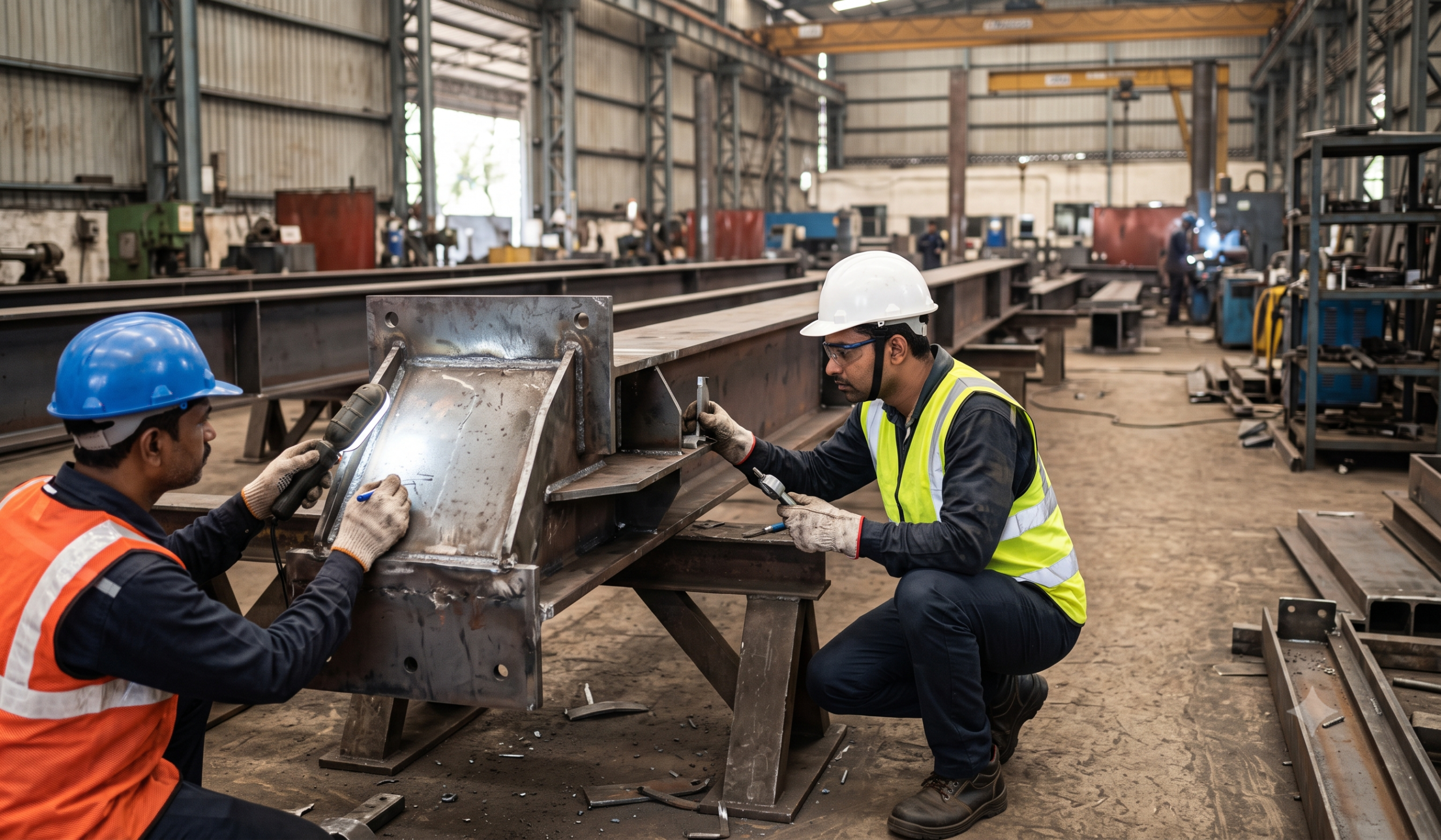
PEB design is much more than creating a basic building shape. Project-specific engineering dictates the structural efficiency, safety, and overall cost of the facility.
Engineers must calculate exact project requirements, considering building dimensions, overhead crane loads, and site conditions. They must account for geographic wind speeds and seismic zones to ensure the building remains stable under extreme stress. Furthermore, intelligent design accommodates operational requirements and allows for seamless future expansion. A poorly engineered building either compromises safety or uses excessive steel, unnecessarily inflating your project cost.
How Much Does a PEB Structure Cost in India?
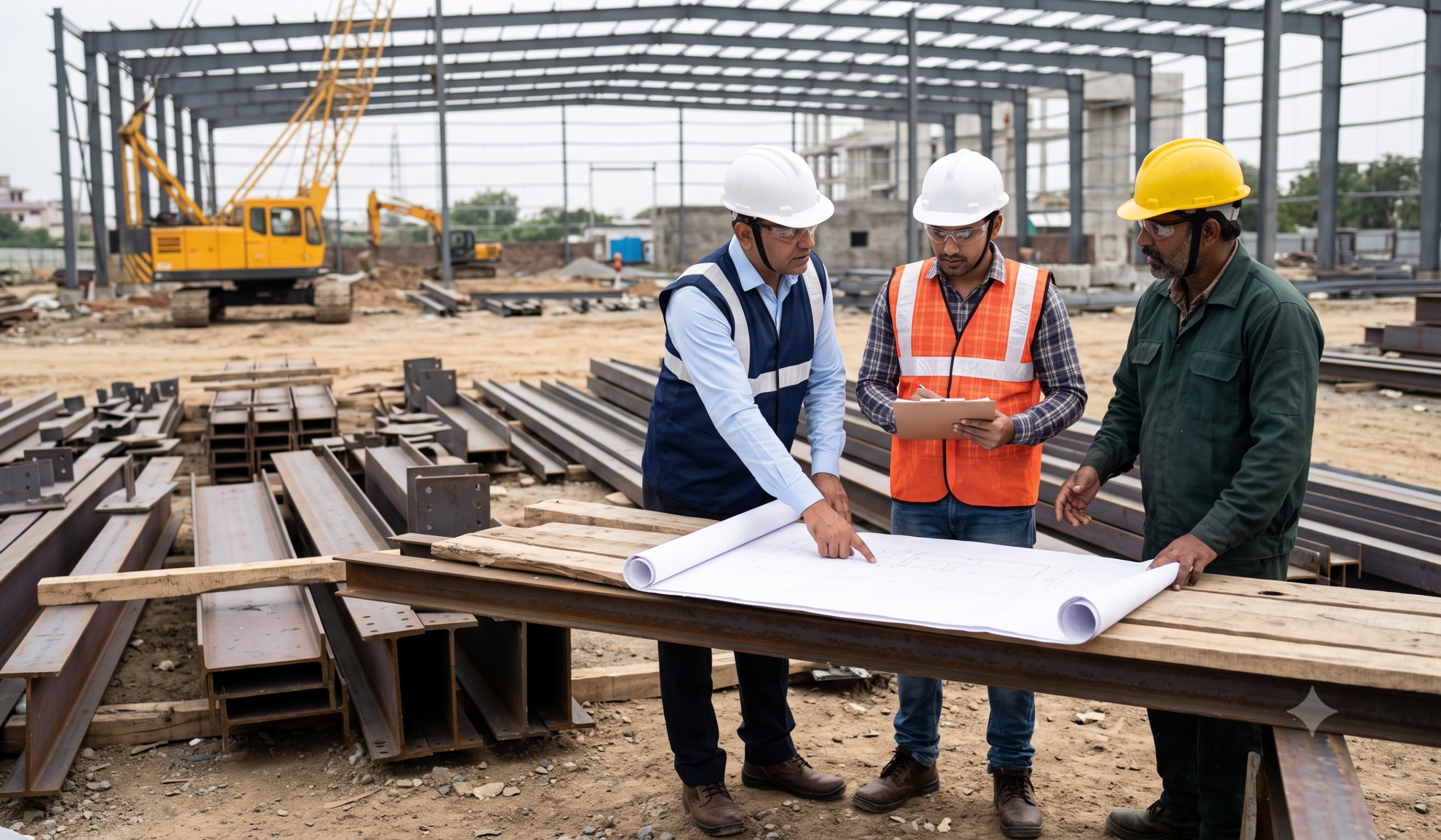
There is no single fixed price for a PEB structure. Costs fluctuate heavily because every building is custom-engineered. Comparing vendors based solely on a quoted price without evaluating the overall project value often leads to hidden expenses later.
Major factors that dictate the final PEB construction cost in India include the building’s overall size and the complexity of the structural design. The total steel quantity, which is driven by load requirements, heavily influences the price. Additionally, material specifications for roofing, wall cladding, and insulation play a significant role. Finally, logistics, transportation distance, site conditions, and the cost of safe erection all impact the final project expenditure.
What Affects PEB Manufacturing and Installation Time?
Two similar-looking PEB projects can have vastly different completion timelines based on execution variables. The timeline begins with how quickly design approvals are finalized. Engineering complexity also plays a role; intricate multi-level factories take longer to detail than simple storage sheds.
Manufacturing speed depends on raw material availability and the supplier’s fabrication capacity. Once the components are ready, transportation logistics and weather conditions can impact delivery. Finally, site readiness and meticulous erection planning determine how quickly the structure can be safely bolted together on the ground.
PEB vs Conventional Construction: What Is the Difference?
The suitability of either method depends entirely on the building type, site conditions, and project specifications.
Factor | PEB Construction | Conventional Construction |
Design & Engineering | Highly optimized via specialized software | Standardized, often resulting in heavier structures |
Manufacturing | Prefabricated off-site in a controlled factory | Materials are prepared and constructed on-site |
Site Construction | Requires minimal wet work; assembly is dry | Heavy reliance on concrete, curing, and masonry |
Installation | Fast, bolted assembly using heavy cranes | Labor-intensive and sequential building process |
Project Flexibility | Easy to dismantle, modify, or relocate | Permanent; demolition is required for major changes |
Expansion | Future bays can be added easily | Expansion is complex and disruptive |
Cost Considerations | Highly predictable with lower foundation costs | Subject to material fluctuations and labor delays |
Project Timeline | Significantly faster delivery and erection | Slower due to sequential on-site construction steps |
How to Choose the Right PEB Manufacturer for Your Project?
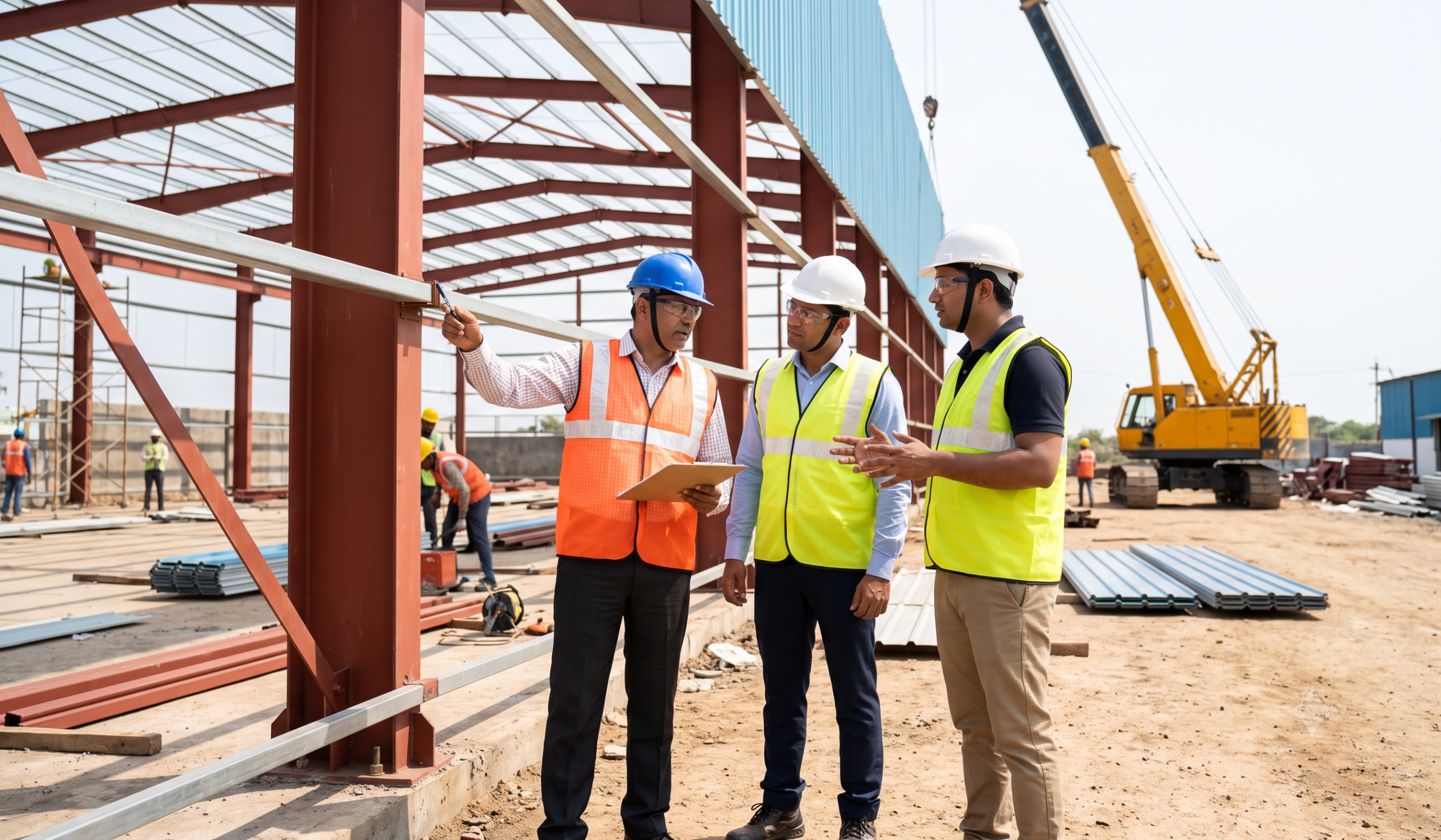
Use this practical checklist to evaluate potential manufacturing partners before signing an agreement:
- Does the manufacturer clearly understand my specific operational and project requirements?
- Do they possess the in-house fabrication and manufacturing capabilities required for my scale?
- Can their engineering team provide optimized, project-specific structural designs?
- What exact steel grades, coatings, and material specifications are detailed in their proposal?
- What is explicitly included (and excluded) in the final quotation?
- What is the realistic expected manufacturing and delivery schedule?
- Is professional site erection and installation support included?
- What level of technical and after-sales support is available post-handover?
- Are all commercial terms, warranties, and documentation clearly defined?
Mandal Group – PEB Manufacturing and Industrial Project Support.
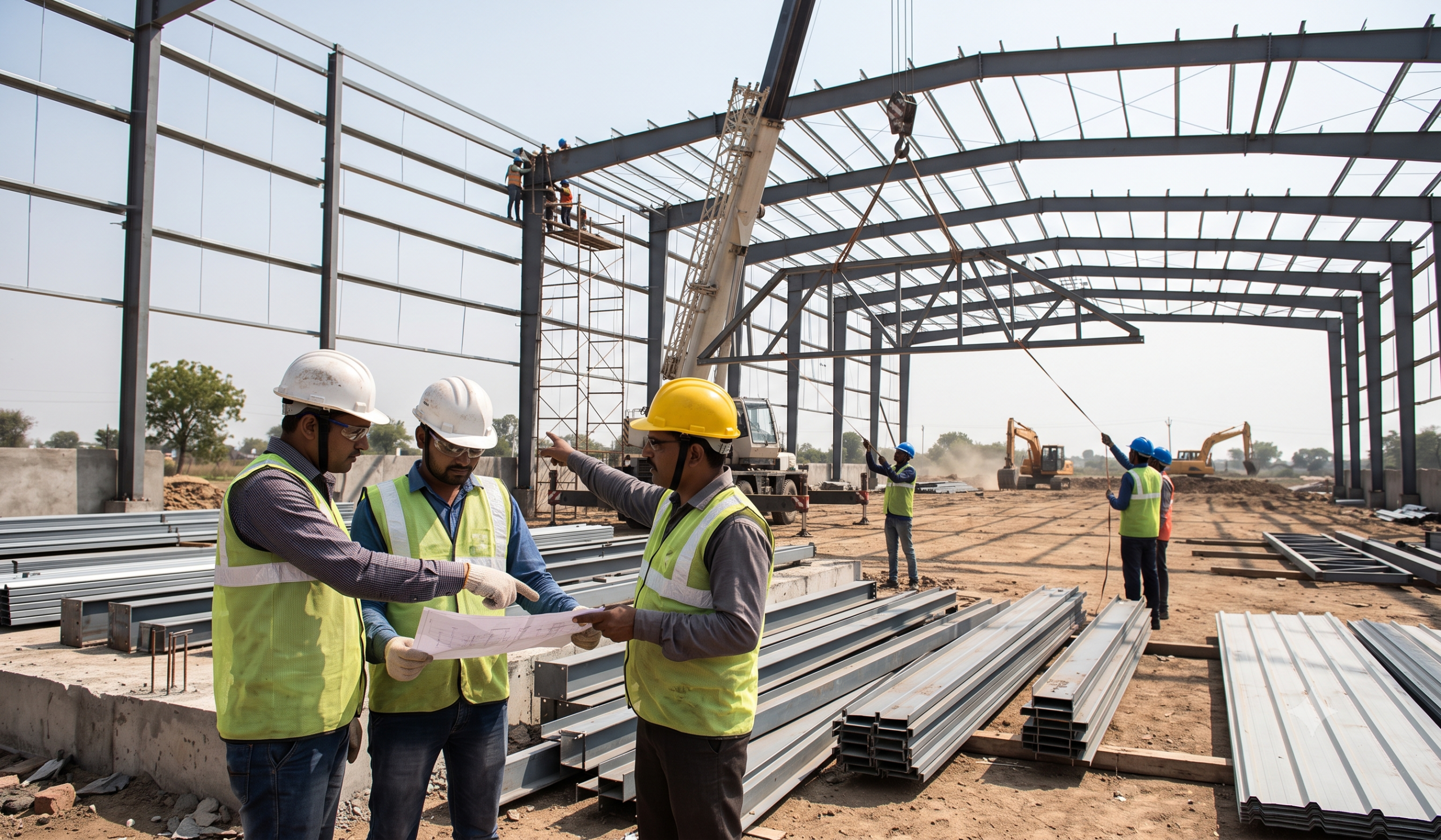
At Mandal Group (Mandal’s PEB Solution Pvt. Ltd), we specialize in the end-to-end delivery of industrial structures. We understand that heavy industries, EPC companies, and commercial developers require precision, durability, and strict adherence to project timelines.
Our capabilities encompass detailed structural engineering, high-quality fabrication, and safe on-site erection. By managing both manufacturing and installation, we help factory owners and warehouse developers avoid the coordination challenges of working with multiple vendors. We focus on delivering robust pre-engineered steel buildings tailored exactly to your site conditions and operational loads. Contact Mandal Group today to discuss your industrial building and PEB project requirements.
Frequently Asked Questions About PEB Manufacturers in India
- What are PEB buildings?
Pre-Engineered Buildings (PEBs) are custom-designed steel structures where all primary and secondary components are engineered and fabricated in a factory. The finished steel sections are then transported to the construction site and bolted together, offering a highly efficient alternative to conventional building methods. - What do PEB manufacturers in India provide?
PEB manufacturers typically provide structural design, steel fabrication, roofing, wall cladding, and necessary building accessories. Professional manufacturers also manage the logistics of transporting materials to the site and provide specialized teams for safe structural erection. - How do I choose a PEB manufacturer?
Choose a PEB manufacturer by evaluating their in-house engineering capabilities, manufacturing quality, and experience with similar industrial projects. Always review their proposed material specifications, delivery timelines, and their ability to provide seamless installation and after-sales support. - How much does a PEB structure cost in India?
The cost of a PEB structure varies widely based on custom project requirements. Key pricing factors include the building dimensions, structural steel quantity, required load capacities, roofing material specifications, and the costs associated with transportation and site erection. - How long does PEB construction take?
PEB construction is significantly faster than conventional methods. While timelines are project-specific, off-site manufacturing allows foundation work and steel fabrication to occur simultaneously. Erection is also rapid because the prefabricated components simply need to be bolted together on-site. - Is PEB better than conventional construction?
PEB is generally superior for industrial sheds, warehouses, and factories because it offers faster project completion, wider clear spans, and lower foundation costs. However, the best method depends entirely on the building’s purpose, design complexity, and specific site conditions. - Can PEB buildings be expanded in the future?
Yes, one of the greatest advantages of PEB structures is their future flexibility. By simply removing the end walls and bolting new prefabricated framework bays onto the existing structure, PEB buildings can be expanded seamlessly with minimal disruption to ongoing operations.
