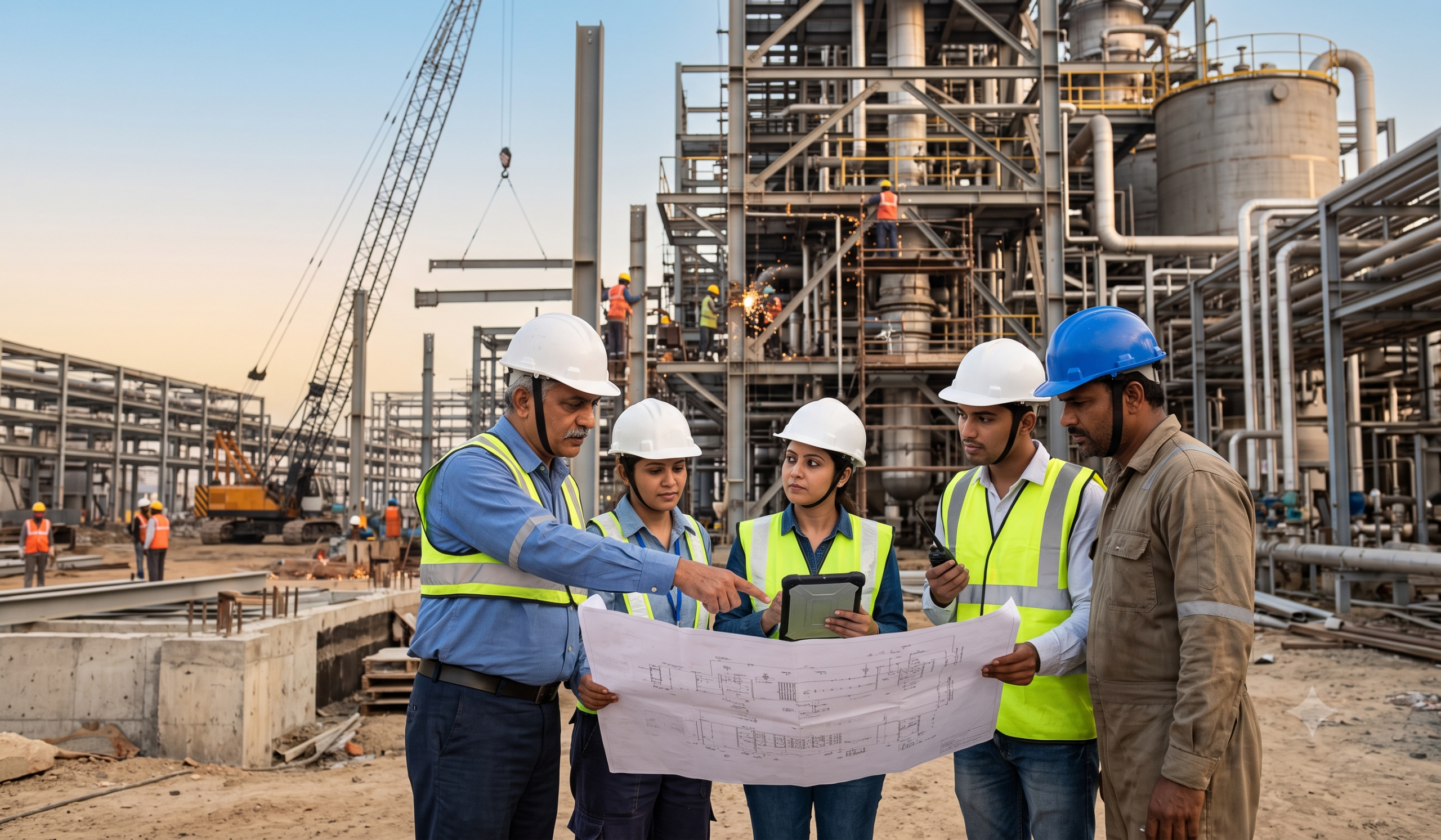
Selecting an industrial engineering company in India dictates the timeline, structural integrity, and operational success of your facility. Industrial projects demand precise coordination of heavy equipment, skilled manpower, strict safety protocols, and complex execution timelines. Partnering with a capable engineering and construction company in India ensures these variables are managed efficiently from site preparation through to final mechanical erection, minimizing costly delays and mitigating site hazards.
What Does an Industrial Engineering Company Do?
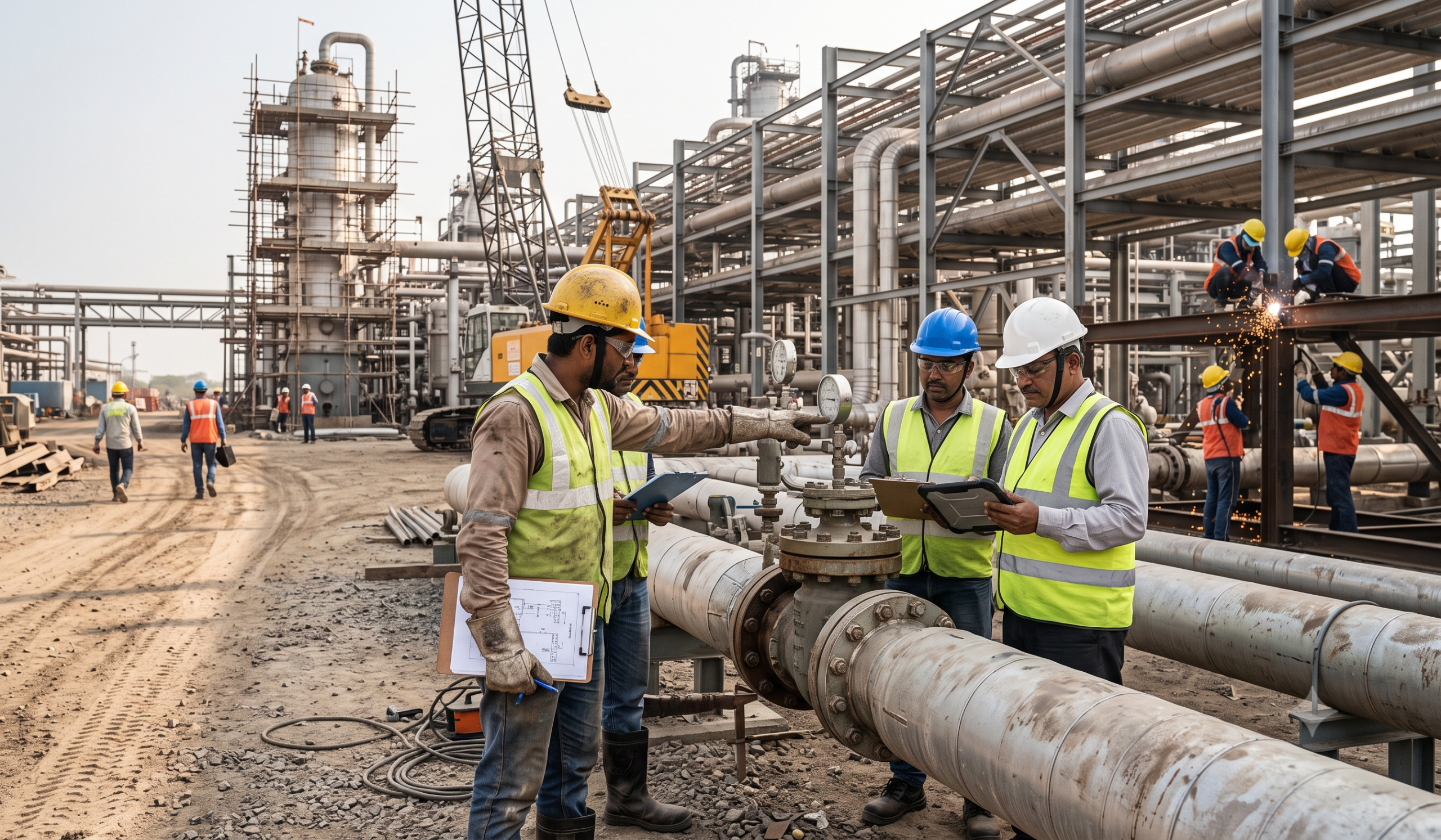
An industrial engineering company acts as the execution backbone for manufacturing, infrastructure, and heavy industrial facilities. These firms translate engineering designs into physical reality through structured project execution.
Core responsibilities typically include providing engineering support, executing civil works, handling mechanical erection, and managing heavy equipment installation. Instead of simply supplying labor, these companies orchestrate plant-related work, overseeing the logistics, site coordination, and technical execution required to bring an industrial plant online. Many also provide ongoing industrial maintenance and operational support long after the initial construction phase is complete.
Why Choosing the Right Industrial Engineering Partner Matters
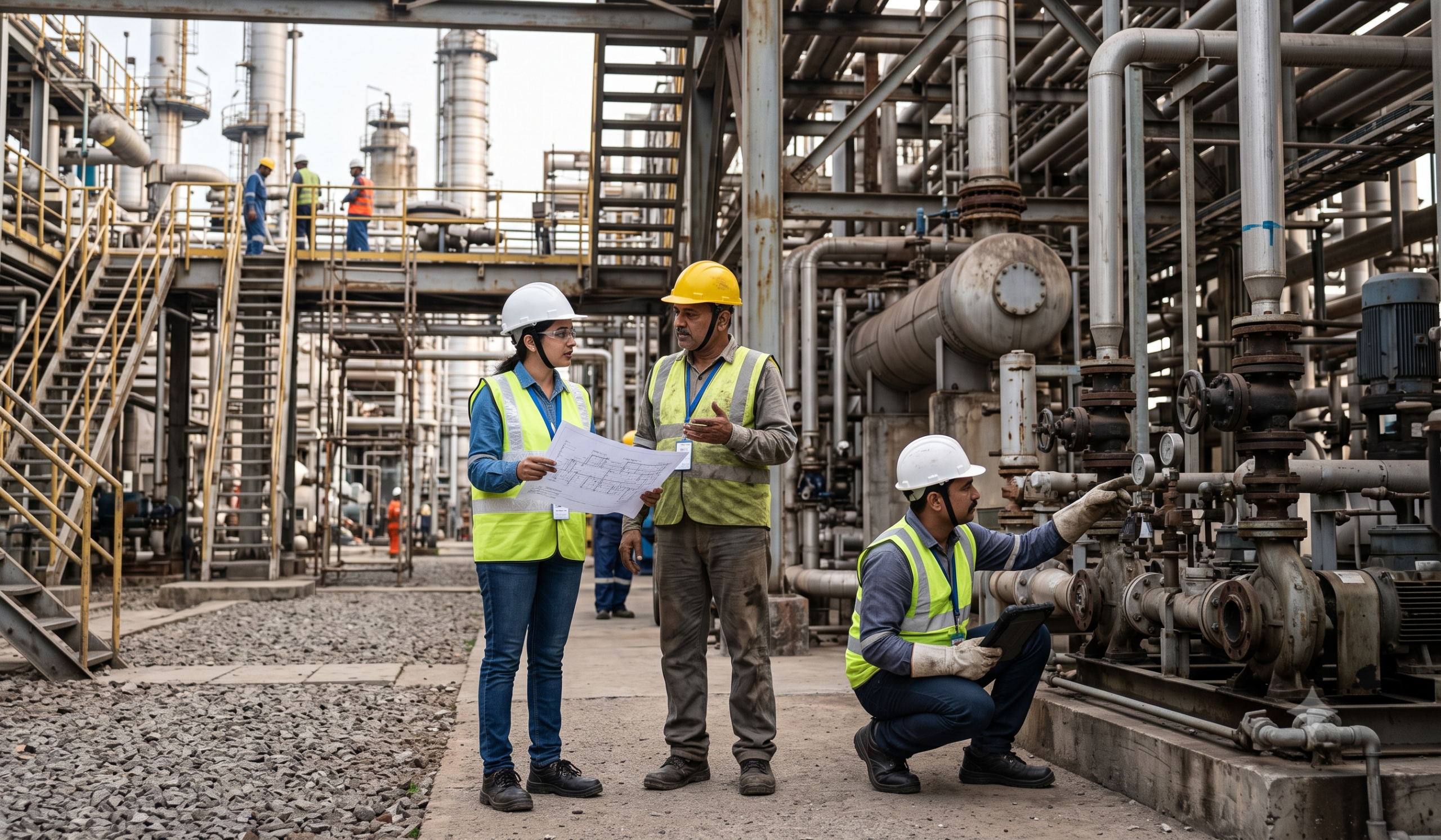
The technical capability of your engineering contractor directly impacts the viability of your investment. A substandard contractor introduces site risks, whereas a competent partner drives project efficiency.
- Project Coordination: Synchronizing civil construction, structural fabrication, and mechanical erection prevents bottlenecking where one trade waits on another.
- Execution Quality: Precise adherence to structural blueprints and engineering tolerances prevents catastrophic failures during heavy mechanical erection and daily plant operations.
- Safety: Industrial sites feature high-risk activities like heavy lifting and confined-space welding. The right partner enforces strict safety protocols to achieve zero-harm execution.
- Schedule Management: Capable firms utilize structured industrial project management to hit critical milestones and prevent costly downstream delays.
- Resource Planning: Securing the right heavy equipment, modular transport, and certified manpower at the exact moment they are needed keeps the site moving.
- Communication: Transparent reporting ensures project owners, procurement teams, and plant managers have an accurate view of site progress and emerging challenges.
5 Questions to Ask Before Hiring an Industrial Engineering Company in India.
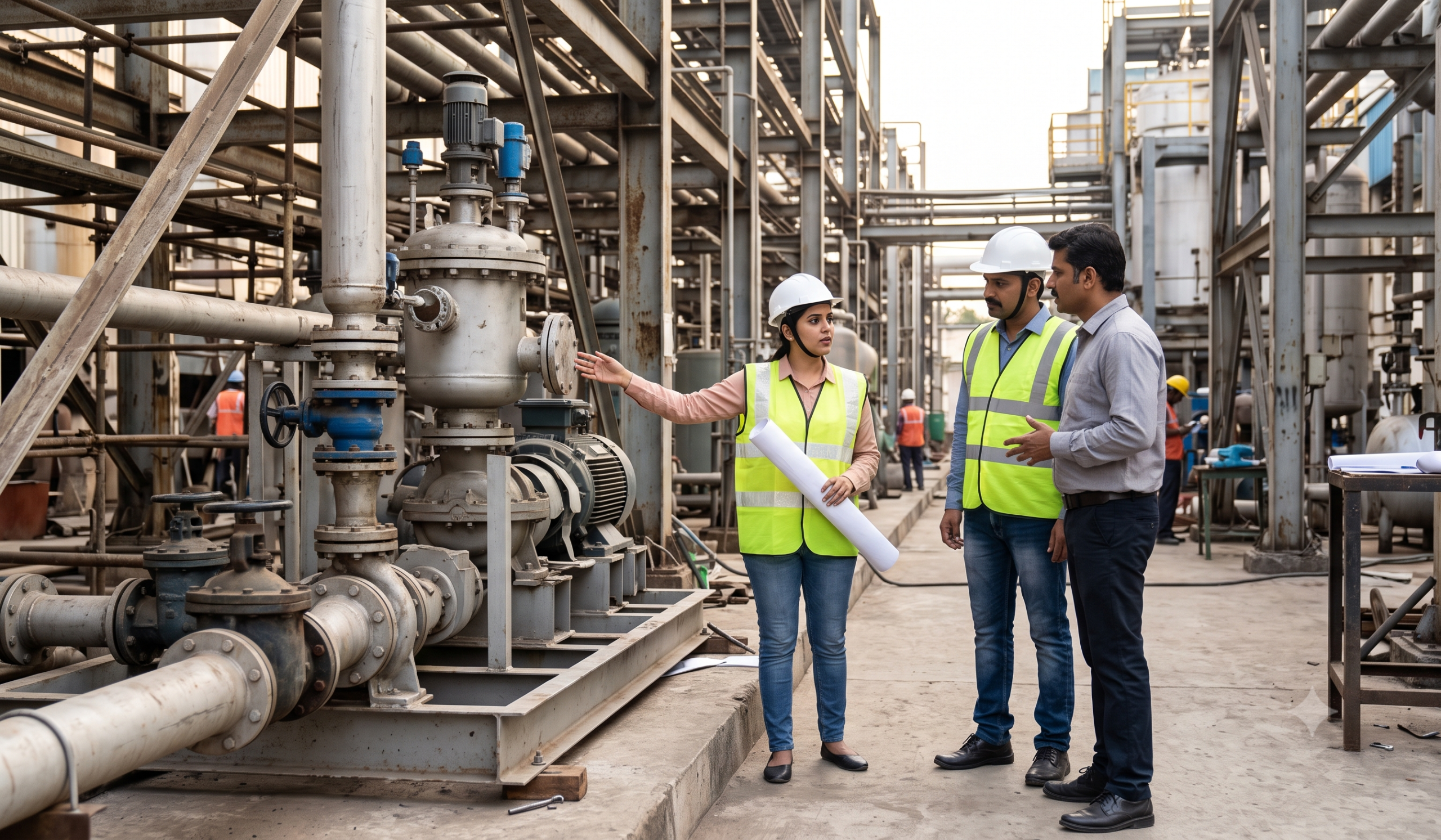
1. Does the Company Have Experience With Similar Industrial Projects?
Industrial construction is vastly different from commercial real estate. Ask the contractor to demonstrate their experience with industrial project engineering specific to your sector—whether that is a steel plant, heavy manufacturing facility, or logistics warehouse. Verify their ability to handle the specific scale, load-bearing requirements, and environmental challenges your project entails.
2. What Engineering and Execution Services Does the Company Provide?
Fragmenting a project across too many specialized vendors increases coordination risks. Determine if the contractor can handle multiple phases of the project. Check their capacity for civil construction services, structural steel fabrication, and mechanical erection services. A company capable of executing turnkey industrial projects or providing comprehensive EPC engineering services reduces the administrative burden on your procurement team.
3. How Does the Company Manage Safety and Quality?
Site safety and execution quality cannot be compromised. Ask how the company supervises its workforce and manages site hazards. Investigate their procedures for conducting quality checks on critical welds, concrete pours, and structural alignments. Ensure they deploy dedicated safety officers and utilize trained, certified manpower rather than relying entirely on unskilled casual labor.
4. Can the Company Manage Manpower, Equipment, and Project Resources?
A contractor is only as effective as the resources they control. Ask about their access to heavy lifting equipment, multi-axle transport for oversized loads, and specialized tools. Furthermore, verify their ability to deploy technical manpower—such as certified welders, riggers, and site engineers—at scale to meet aggressive project deadlines.
5. How Does the Company Handle Project Coordination and Communication?
Industrial plant engineering requires constant alignment between the client, the design consultants, and the site execution team. Ask how the company handles site supervision, progress reporting, and schedule adjustments. A reliable contractor will have documented processes for managing change orders, site queries, and coordination with parallel sub-contractors.
What Should You Check Before Finalizing an Industrial Engineering Company?
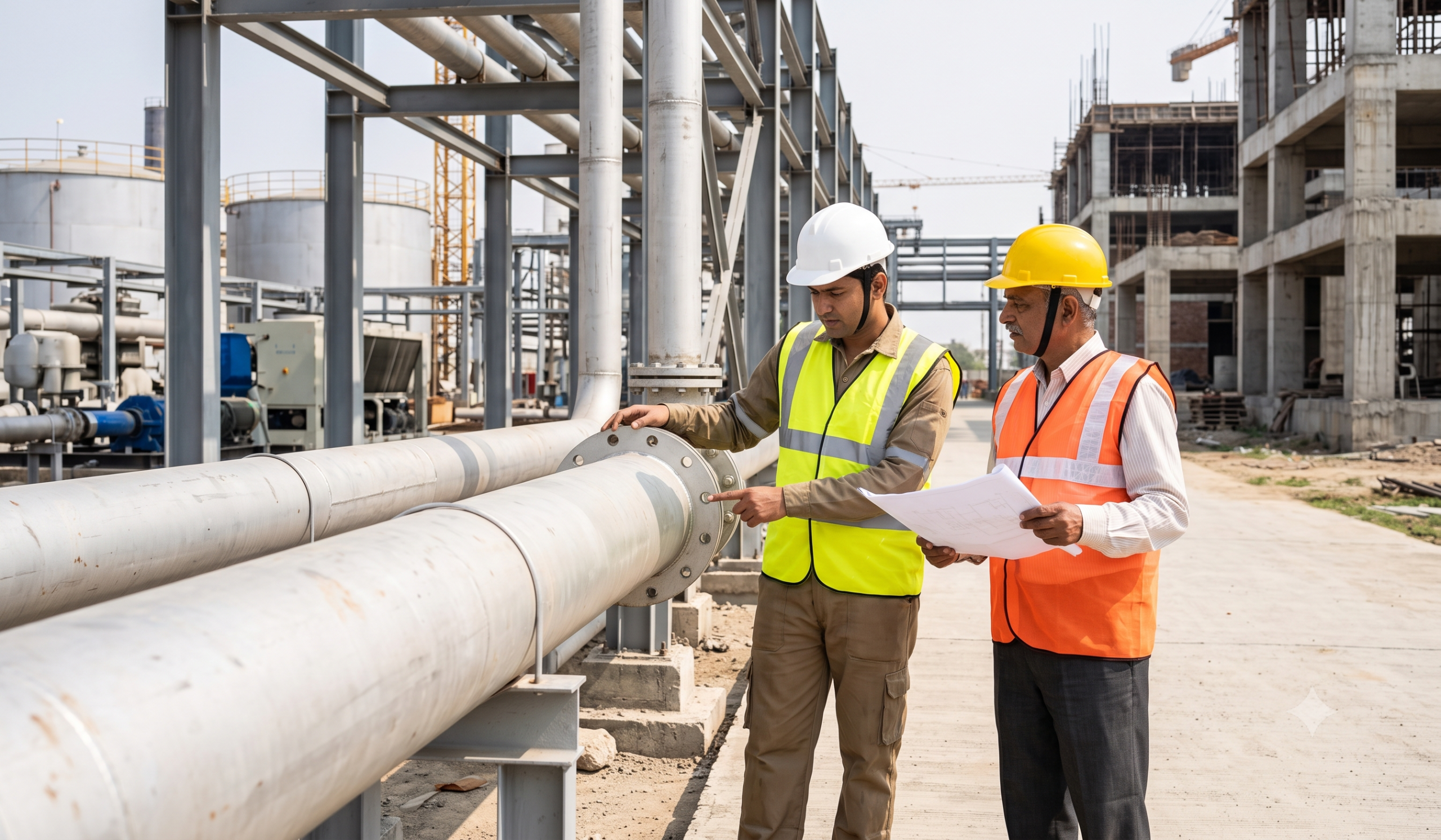
Use this practical checklist to evaluate a prospective engineering contractor before signing a contract:
- Relevant Experience: Proof of execution in your specific industrial sector.
- Scope of Services: Clear alignment between your project needs and their core capabilities.
- Technical Team: Availability of qualified site engineers, supervisors, and project managers.
- Skilled Manpower: Access to certified tradesmen (welders, riggers, fabricators, fitters).
- Equipment Availability: Direct access to or reliable sourcing of cranes, excavators, and heavy transport.
- Safety Practices: Documented Job Safety Analyses (JSA), hazard mitigation plans, and PPE enforcement.
- Quality Processes: Standard operating procedures for material testing, structural alignment, and weld inspections.
- Project Execution Capability: Demonstrated ability to manage sequential trades without causing site delays.
- Communication: Clear reporting structures and dedicated points of contact for project owners.
- Commercial Clarity: Transparent pricing, clear scope boundaries, and defined payment milestones.
Industrial Engineering Services to Consider for Your Project
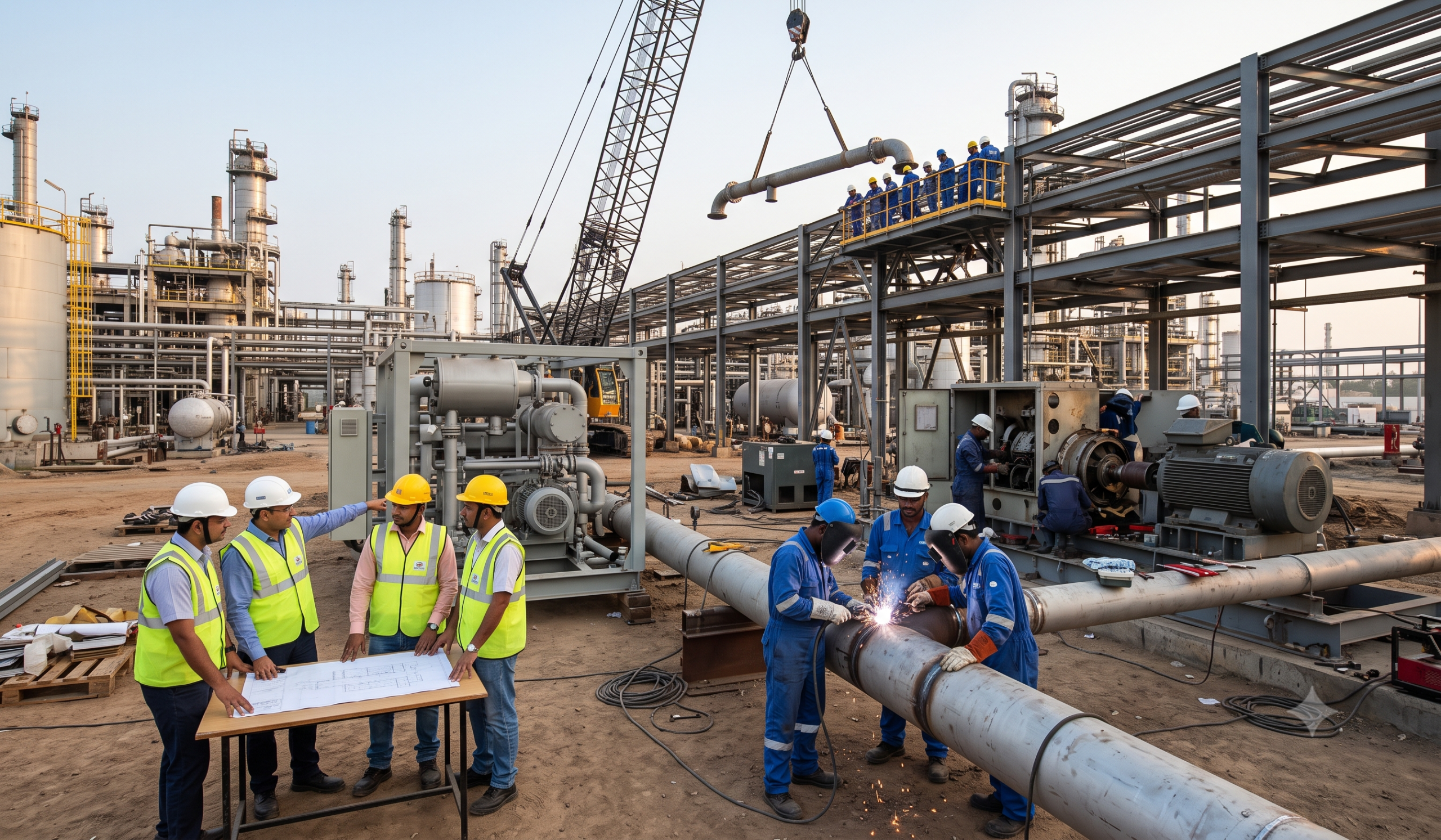
When evaluating industrial engineering solutions, consider whether the contractor can provide the following critical services:
- Industrial Engineering Services: Site planning, structural detailing, and execution methodology.
- Civil Construction: Heavy machine foundations, site grading, trenching, and industrial flooring.
- Structural Steel Erection: Lifting, aligning, and bolting heavy columns, trusses, and crane girders.
- Equipment Erection and Installation: Precise placement and alignment of plant machinery, furnaces, and EOT cranes.
- Mechanical Works: Fabrication and assembly of heavy mechanical components and material handling systems.
- Pipeline Installation: Routing and welding of high-pressure hydraulic, pneumatic, and industrial water networks.
- Industrial Maintenance: Ongoing plant support, shutdown maintenance, and facility repairs.
- Technical Manpower: Supplying certified engineers, supervisors, and tradesmen directly to the site.
- Industrial Transportation: Heavy haulage and oversized load (ODC) logistics to move critical assets safely.
Mandal Group – Industrial Engineering & Project Support.
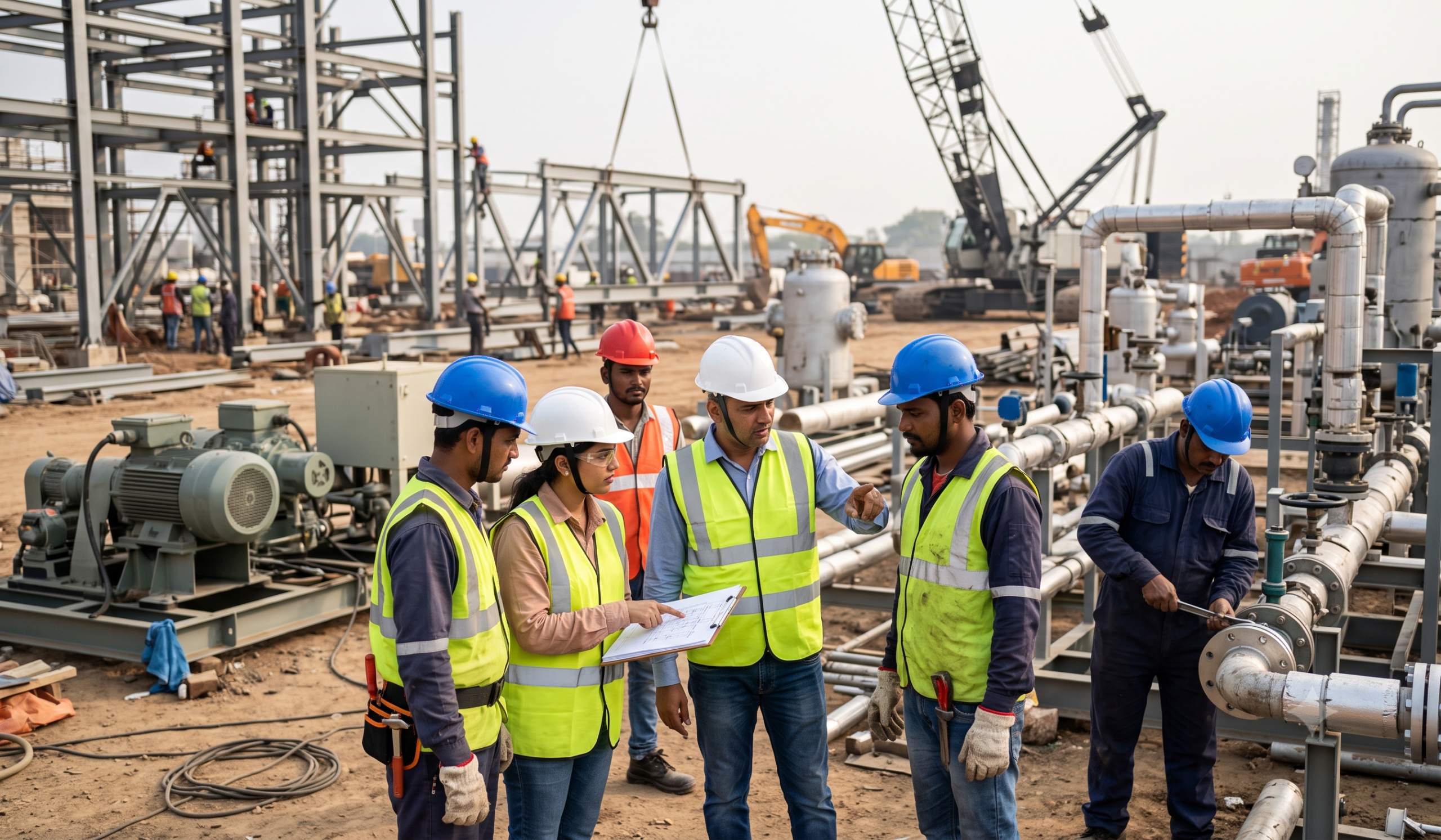
Mandal Group provides comprehensive industrial engineering and project-support services tailored for heavy manufacturing, construction, and engineering sectors. By integrating multiple execution disciplines, Mandal Group helps plant owners and contractors streamline their site operations.
Rather than managing a disjointed network of subcontractors, clients rely on Mandal Group for cohesive project execution. The company’s capabilities span heavy civil works, structural steel fabrication, and mechanical erection. Furthermore, Mandal Group supports industrial projects through technical manpower supply, heavy equipment rental, industrial transportation, and specialized pipeline installation. This unified approach ensures that critical project phases are executed safely, sequentially, and strictly according to industrial engineering standards.
Contact Mandal Group today to discuss your industrial project requirements with our expert engineering and execution team.
Final Checklist Before Hiring an Industrial Engineering Company in India.
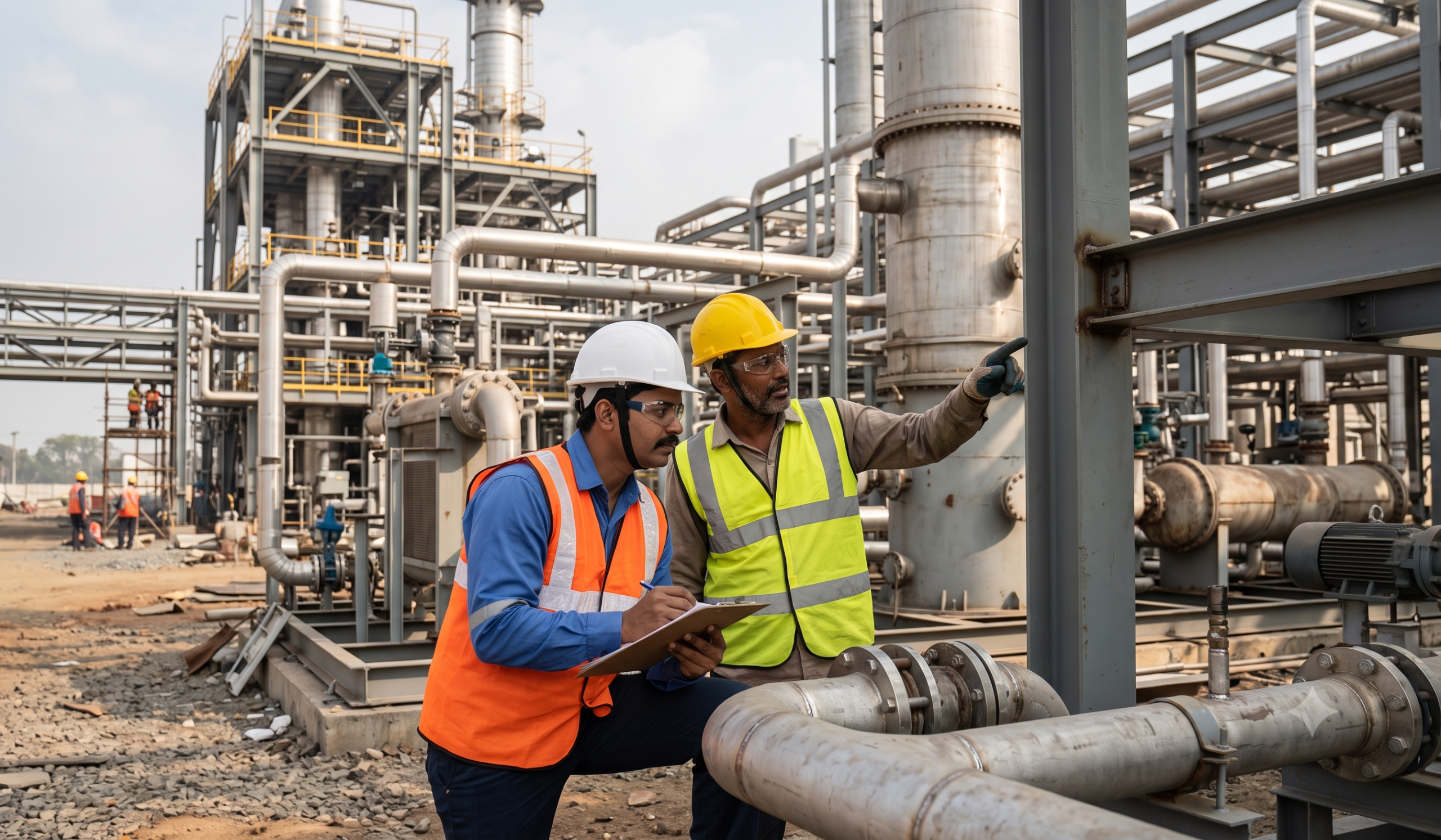
Before issuing a Purchase Order or finalizing a contract, ensure you have verified the following:
- [ ] The company’s core capabilities match your project’s heaviest requirements.
- [ ] You have reviewed their safety protocols and site supervision hierarchy.
- [ ] The scope of work clearly defines responsibilities for equipment, logistics, and manpower.
- [ ] Coordination and reporting expectations are documented in writing.
- [ ] The company has a realistic mobilization plan for deploying to your site.
Frequently Asked Questions
- What does an industrial engineering company in India do?
An industrial engineering company executes the physical construction, mechanical installation, and site coordination required to build, expand, or maintain heavy manufacturing plants, warehouses, and industrial infrastructure. - What services do industrial engineering companies provide?
Core services typically include heavy civil construction, structural steel fabrication and erection, mechanical equipment installation, industrial piping, plant maintenance, and the supply of technical manpower and heavy lifting equipment. - How do I choose an industrial engineering company?
Evaluate companies based on their direct experience with your specific industry, their in-house technical capabilities, their access to skilled manpower and heavy equipment, and their documented safety and quality control procedures. - What should I check before hiring an industrial contractor?
Always verify their safety records, quality inspection processes, capacity to mobilize resources quickly, and their ability to handle project coordination transparently through dedicated site management teams. - What is the difference between industrial engineering and EPC services? Industrial engineering generally focuses on the physical execution, mechanical erection, and site management of a project. EPC (Engineering, Procurement, and Construction) is a broader turnkey contract where a single entity handles the initial design engineering, procures all materials, and executes the final construction.
