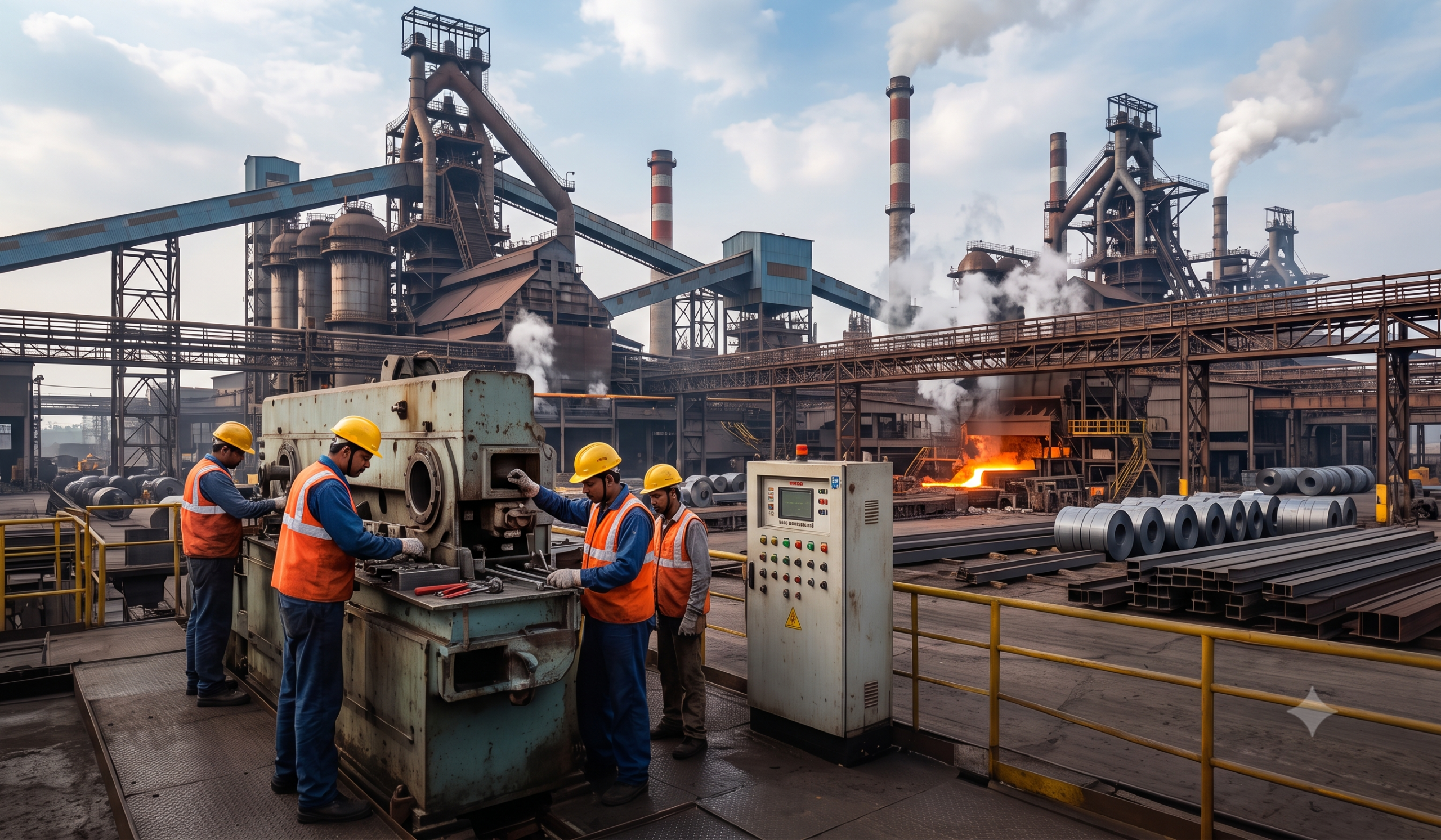
Steel manufacturing is one of the most demanding industrial environments in the world. Facilities operate under extreme temperatures, handle massive physical loads, and run continuous production cycles. In such a high-stakes setting, reliable steel plant operation is not just about keeping the machines running—it is about ensuring safety, maximizing yield, and preventing catastrophic equipment failures.
To achieve this, plants rely on comprehensive industrial maintenance and skilled technical manpower. From routine mechanical checks to executing complex shutdown maintenance, the way a facility is managed directly dictates its profitability and lifespan.
This guide explains the fundamentals of steel plant operations and maintenance, the critical role of maintenance, how modern AI technology is changing the industry, and how integrated service providers like Mandal Group support these massive industrial ecosystems.
What Is Steel Plant Operation?
Steel plant operation refers to the active management, execution, and monitoring of the steel manufacturing process. It involves controlling the machinery, handling raw materials, managing thermal and chemical processes, and ensuring that the final output meets strict metallurgical standards.
Effective operation requires a synchronized effort between automated control systems and skilled operators on the ground. It covers everything from feeding raw iron ore into a Direct Reduced Iron (DRI) kiln to overseeing the final shaping in the rolling mills.
What Is Steel Plant Maintenance?
Steel plant maintenance is the systematic process of inspecting, repairing, and servicing industrial equipment to prevent breakdowns and ensure continuous operation. Because heavy machinery in a steel plant degrades over time due to heat, friction, and heavy loads, maintenance is essential to sustain production.
Maintenance generally falls into four categories:
- Routine Maintenance: Daily or weekly checks, lubrication, and minor adjustments.
- Preventive Maintenance: Scheduled servicing based on time or operational hours to replace worn parts before they fail.
- Breakdown Maintenance: Reactive repairs performed when equipment unexpectedly stops working.
- Shutdown Maintenance: Planned, large-scale halts in production where major overhauls, refractory changes, and structural repairs are executed.
Why Are Steel Plant Operation and Maintenance Important?
Running a steel plant without a rigorous operation and maintenance strategy leads to frequent outages, safety hazards, and massive financial losses. The core reasons these activities are critical include:
- Production Continuity: Unplanned downtime in a continuous casting machine or blast furnace costs millions in lost production. Proper maintenance minimizes these unexpected failures.
- Equipment Reliability: Heavy rotating equipment, ladles, and cranes undergo severe stress. Regular upkeep extends their lifecycle and ensures they perform at peak capacity.
- Safety: Steel plants handle molten metal and operate high-pressure systems. Well-maintained equipment and tightly controlled operations drastically reduce the risk of industrial accidents.
- Maintenance Planning: A structured approach allows plant managers to order spare parts in advance, schedule technical manpower efficiently, and avoid emergency logistical nightmares.
- Better Operational Control: Smoothly running machinery produces higher-quality steel with fewer defects and less material waste.
What Does Steel Plant Operation and Maintenance Include?
Comprehensive steel plant maintenance services cover a wide array of specialized engineering and mechanical tasks.
Mechanical Maintenance
This involves the repair and alignment of heavy mechanical components such as gearboxes, conveyor systems, hydraulic pumps, and rotary kilns. Precision is key, as misaligned heavy machinery will quickly destroy its own bearings.
Equipment Maintenance
This focuses on specific machinery vital to the plant, including compressors, industrial blowers, material handling equipment, and heavy-duty industrial cranes used for moving ladles and steel coils.
Preventive Maintenance
Preventive tasks include vibration analysis, oil condition monitoring, thermal inspections, and replacing wear-and-tear parts (like seals and belts) based on a strict schedule to prevent unexpected breakdowns.
Breakdown Maintenance
When an unexpected failure occurs, emergency breakdown maintenance teams are deployed. The goal is rapid troubleshooting and immediate repair to bring the plant back online as safely and quickly as possible.
Shutdown Maintenance
During a planned shutdown, the plant (or a specific section) is taken offline. This period is used for massive overhauls: replacing furnace linings, upgrading structural steel, installing new pipelines, and executing deep cleaning.
Technical Manpower Support
None of these activities can happen without skilled hands. This includes supplying certified welders, mechanical fitters, riggers, safety supervisors, and maintenance engineers directly to the plant floor.
Plant Operational Support
Operational support involves assisting the core production team with material handling, equipment monitoring, crane operation, and managing secondary processes to keep the main production line moving smoothly.
Which Areas of a Steel Plant Require Operation & Maintenance?
Different zones within a steel facility face unique stresses and require specific maintenance approaches.
Plant Area | Primary Function | Typical Maintenance Focus |
Pellet Plants | Converts iron ore dust into pellets. | Conveyor belts, rotary kilns, crushers, and screening equipment. |
DRI (Sponge Iron) | Reduces iron ore using coal or gas. | Rotary kiln alignment, cooler maintenance, and refractory repairs. |
Steel Melting Shop (SMS) | Melts iron to produce liquid steel. | Electric Arc/Induction furnaces, ladles, water-cooling panels, and overhead cranes. |
Rolling Mills | Shapes b illets/slabs into final products. | Roller alignment, heavy-duty gearboxes, hydraulic shears, and high-capacity motors. |
How AI and Modern Technology Are Changing Steel Plant Maintenance.
Historically, steel plants relied heavily on preventive (calendar-based) or breakdown (run-to-fail) maintenance. Today, AI-supported maintenance and monitoring capabilities are transforming how facilities operate.
By utilizing sensors and operational data analysis, plant managers gain unprecedented visibility into equipment health.
- Condition Monitoring: Sensors track vibration, temperature, and acoustics on critical equipment like rolling mill motors.
- Predictive Maintenance: AI algorithms analyze this data to identify equipment abnormalities early. Instead of waiting for a part to fail, the system predicts potential maintenance requirements based on actual wear and tear.
- Data-Based Decisions: This allows teams to schedule repairs only when necessary, moving away from wasteful calendar-based replacements while still avoiding unexpected breakdowns.
Traditional vs. AI-Supported Maintenance
Feature | Traditional Maintenance | AI-Supported Maintenance |
Trigger | Time passed or machine broken. | Data indicating early signs of wear. |
Downtime | Higher risk of unexpected failure. | Planned, targeted downtime. |
Parts Usage | Replaced on schedule (often prematurely). | Replaced based on actual condition. |
Visibility | Manual inspections required. | Continuous, real-time operational monitoring. |
How Mandal Group Supports Steel Plant Operation & Maintenance
Mandal Group provides integrated industrial services designed to keep steel plants operating safely and efficiently. By combining engineering expertise with a robust technical workforce, we support critical plant infrastructure.
Our approach includes:
- Integrated Industrial Services: We do not just maintain equipment. We handle equipment erection, structural steel erection, and pipeline installation, ensuring comprehensive site support.
- Skilled Technical Manpower: We supply the experienced tradespeople, supervisors, and engineers required to execute daily maintenance and critical shutdown activities.
- Heavy Equipment Support: Through our crane rental and crane erection services, we provide the heavy lifting capabilities essential for moving ladles, installing machinery, and executing structural repairs.
- Asset Protection: We offer industrial painting and coating to protect steel structures and pipelines from the harsh, corrosive environments of a steel plant.
- Advanced Technology Integration: We utilize AI-supported monitoring and maintenance planning approaches to help plants identify abnormalities early, track equipment performance, and make smarter maintenance decisions.
- Turnkey Project Coordination: From civil works to mechanical maintenance, we manage multiple disciplines under one umbrella, simplifying project execution for plant owners.
Steel Plant Operation & Maintenance Process
When a professional industrial service provider takes on steel plant maintenance, the workflow generally follows these steps:
- Requirement and Site Assessment: Evaluating the plant’s current condition, equipment health, and operational goals.
- Equipment and Operational Review: Identifying critical machinery (furnaces, rolling mills) that require immediate attention or continuous monitoring.
- Workforce and Maintenance Planning: Developing a schedule and mobilizing the right technical manpower, tools, and cranes.
- Maintenance/Operation Execution: Performing the physical work—whether it is preventive checks, structural erection, or executing a time-sensitive shutdown.
- Monitoring and Inspection: Testing the equipment post-maintenance, using advanced condition monitoring to ensure everything operates within safe parameters.
- Reporting and Improvement: Analyzing operational data to refine future maintenance schedules and improve overall plant reliability.
Benefits of Professional Steel Plant Operation & Maintenance.
Partnering with an experienced industrial services company provides significant advantages to steel manufacturers:
- Minimized Downtime: Faster turnarounds during shutdowns and fewer unexpected breakdowns.
- Single-Source Coordination: Handling manpower, cranes, structural work, and maintenance through one provider reduces logistical friction.
- Cost Efficiency: Predictive maintenance and skilled execution reduce wasted materials and secondary equipment damage.
- Enhanced Safety: Professional agencies strictly enforce industrial safety standards, PPE usage, and secure rigging protocols.
- Scalability: The ability to rapidly increase workforce numbers during a plant turnaround without the burden of long-term HR overheads.
How to Choose a Steel Plant Operation & Maintenance Service Provider.
Selecting the right partner for industrial plant maintenance is a critical decision. Use this checklist when evaluating providers:
- Industrial Experience: Do they have a proven track record specifically in steel plants and heavy engineering?
- Technical Manpower: Can they supply vetted, certified tradespeople (welders, riggers, fitters)?
- Equipment Capabilities: Do they have access to their own heavy machinery, such as industrial cranes and transportation?
- Safety Practices: Do they have robust safety protocols for high-risk activities like hot work and working at heights?
- Technology Adoption: Are they capable of integrating with modern AI-supported maintenance and monitoring systems?
- Service Integration: Can they handle civil works, structural erection, pipelines, and mechanical maintenance simultaneously?
- Response Capability: Can they mobilize rapidly for emergency breakdown support?
Planning operation or maintenance support for a steel plant? Contact Mandal Group to discuss your project, equipment, and technical manpower requirements with our industrial engineering experts.
Follow Mandal Group on Instagram for the latest updates, industrial projects, services, and company news.
Frequently Asked Questions:
- What is steel plant operation?
Steel plant operation is the active management and control of the machinery, raw materials, and thermal processes required to manufacture steel safely and efficiently.
- What does steel plant maintenance include?
It includes mechanical repairs, pipeline installation, equipment alignment, lubrication, structural repairs, and routine inspections to keep heavy industrial machinery functioning.
- Why is maintenance important in a steel plant?
Maintenance prevents catastrophic equipment failures, ensures the safety of the workforce, reduces costly unplanned downtime, and maintains the quality of the final steel product.
- What is preventive maintenance in a steel plant?
Preventive maintenance involves scheduled inspections, part replacements, and servicing based on time or operating hours to fix equipment before it breaks down.
- What is shutdown maintenance?
Shutdown maintenance is a highly coordinated, planned halt in plant production used to execute major repairs, upgrades, and overhauls that cannot be done while the machinery is running.
- How does AI help steel plant maintenance?
AI helps by analyzing data from equipment sensors (like vibration and temperature) to predict when a machine is likely to fail, allowing for repairs to be planned precisely when needed, rather than guessing.
- What type of technical manpower is required?
Steel plants require highly specialized personnel, including certified welders, mechanical fitters, riggers, heavy equipment operators, maintenance engineers, and safety supervisors.
- How can companies choose a steel plant maintenance service provider?
Look for a provider with heavy industrial experience, the ability to supply skilled technical manpower, strict safety standards, in-house crane and equip
